Furnace repair in Alamosa, CO
Furnace diagnosis and repair for Alamosa homes and heating systems.
Furnace Repair
TownAlamosa, CO
CountyAlamosa
ZIP81101
- 5years of experience
- 2,000+customers served
- 15team members
- 4.9/5from 345 Google reviews
High-elevation furnace repair in the San Luis Valley
Alamosa sits in the San Luis Valley of south-central Colorado, beside the Rio Grande and along U.S. Highways 160 and 285. The city includes established residential blocks, homes near Adams State University, and newer development at its edges. Its high elevation, dry air, and notably cold winter nights put sustained demand on home heating systems. A furnace that barely keeps up during mild weather can show clearer faults during a valley cold spell.
High-altitude combustion
Furnace combustion depends on correct fuel, air, venting, and burner adjustment. At Alamosa’s elevation, equipment must be configured according to the manufacturer’s altitude instructions; changes should not be made by guesswork.
Very cold overnight temperatures
Low overnight temperatures can reveal marginal igniters, weak blower motors, clogged filters, and heat-loss problems. A system that runs for hours may also expose airflow restrictions that did not show during a brief daytime cycle.
Dry air and airborne dust
The valley’s dry conditions can load filters and return grilles with dust. Filter maintenance helps protect the blower motor, evaporator coil in combination systems, and furnace limit controls from reduced airflow.
Mix of older and updated homes
Alamosa has older houses with retrofitted heating equipment as well as newer forced-air installations. Duct sizing, return-air paths, insulation, and thermostat location can differ widely from one property to the next.
Furnace troubleshooting for Alamosa heating equipment
Many Alamosa homes use forced-air gas furnaces paired with ductwork and a central thermostat. The heating cycle starts when the thermostat calls for heat, followed by inducer operation, pressure-switch verification, ignition, burner lighting, flame-sensor confirmation, and blower operation. If any safety check fails, the control board may stop the cycle and store a diagnostic code.
No heat does not always mean that the furnace itself has failed. A drained thermostat battery, incorrect thermostat setting, open furnace-door switch, tripped electrical breaker, clogged condensate line, or blocked intake and exhaust pipe can interrupt operation. The model number and any flashing status light provide useful information when diagnosing the unit.
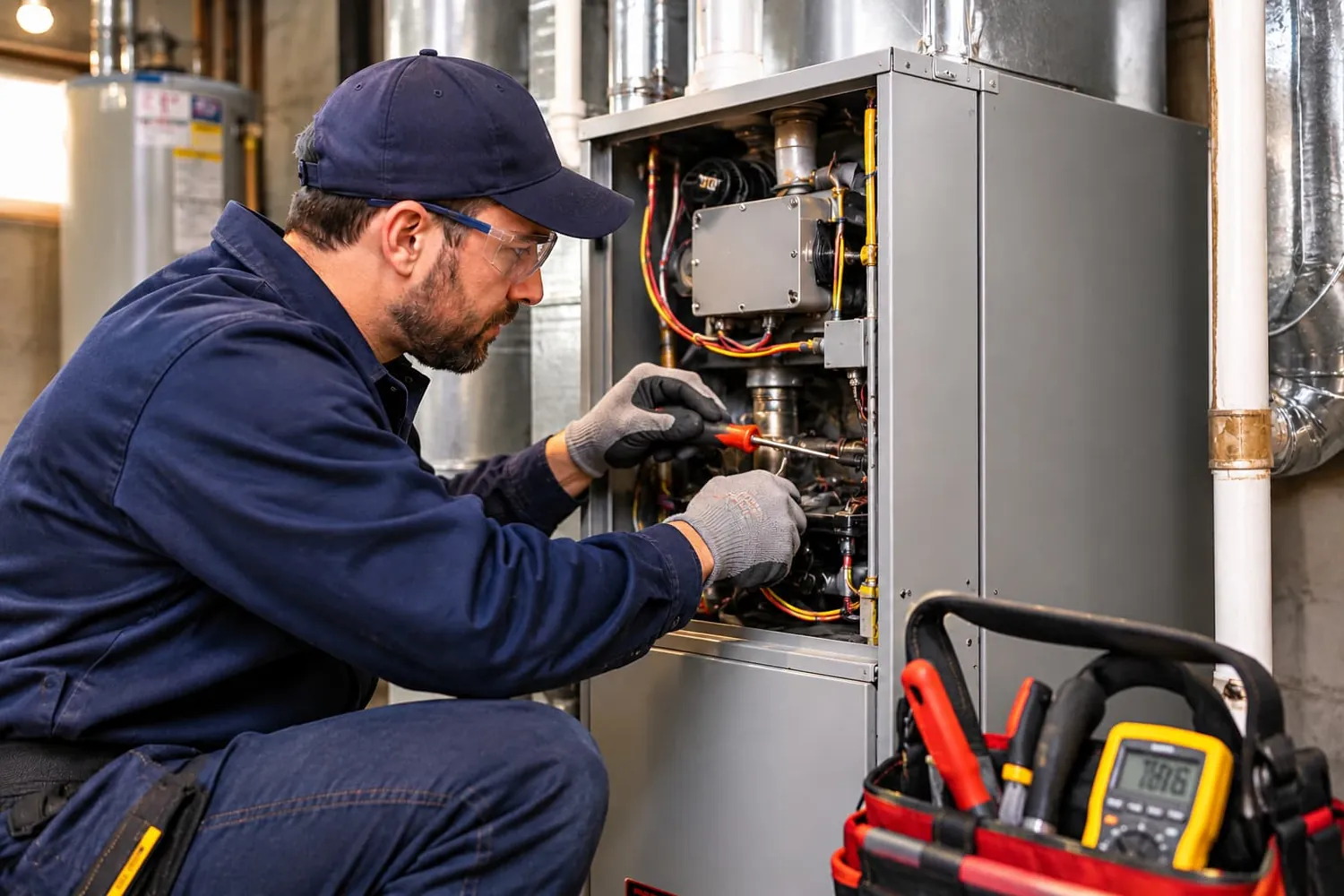
A complete repair assessment can check combustion-air piping, vent connections, burner flames, ignition parts, flame sensor condition, gas valve operation, blower amperage, filter condition, temperature rise, and duct airflow. Condensing furnaces also need a clear condensate trap and drain because water is part of their normal operation. Carbon monoxide alarms are separate safety devices and should be installed and maintained according to their instructions.
Furnace repair work in Alamosa
| Part | What it does | Signs it is failing |
|---|---|---|
| Air filter | Catches dust before air enters the furnace. | Weak airflow, frequent cycling, or a visibly dirty filter. |
| Thermostat | Signals the furnace when the home needs heat. | The furnace does not start, runs at the wrong time, or does not reach the set temperature. |
| Igniter | Starts the burner ignition sequence. | The blower runs but the burners do not light. |
| Flame sensor | Confirms that a burner flame is present. | Burners light briefly, then shut off. |
| Blower motor | Moves heated air through the duct system. | Little airflow, loud operation, or a blower that does not start. |
Cold valley nights and furnace performance
Alamosa’s San Luis Valley setting brings dry weather, intense sun, snow, and cold nights during the heating season. Temperature swings can make thermostat scheduling and indoor comfort uneven, particularly in homes with uninsulated ducts or air leaks. Snow and wind should not be allowed to block high-efficiency furnace intake or exhaust pipes. A pre-season inspection can identify worn ignition parts and airflow problems before extended cold weather arrives.
Where we work in Alamosa
Also nearby: Monte Vista, La Jara, Mosca, Hooper, Manassa, Fort Garland.
Downtown Alamosa
Established homes in the central grid may have furnaces added during later renovations and ductwork routed through basements or crawlspaces.
Adams State University area
Homes near the campus may have varied occupancy patterns, making programmable thermostat settings and filter checks important.
East Alamosa
East-side residential areas include homes with differing ages, insulation levels, and return-air layouts.
West Alamosa
West Alamosa properties face the same open-valley winter exposure that can increase heating runtime.
Alamosa furnace questions
Why will an Alamosa furnace light and then shut down?
A dirty or failing flame sensor is one possible cause, but venting, gas supply, pressure-switch, and control problems can produce similar symptoms. The ignition cycle needs to be observed and tested rather than reset repeatedly.
Does elevation matter for furnace repair in Alamosa?
Yes. Fuel-burning equipment is subject to manufacturer instructions for high-altitude installation and adjustment. The furnace rating information and installation details should be reviewed before combustion-related work.
What can cause weak airflow from vents?
A loaded filter, dirty blower wheel, closed register, blocked return grille, damaged duct, or failing blower motor can reduce airflow. Weak airflow may cause a furnace to overheat and cycle off on its limit switch.
Which ZIP code serves Alamosa?
Alamosa uses ZIP code 81101. Include the address and the furnace brand or model if it is available when requesting service.
Should exterior furnace pipes be cleared after snow?
Direct-vent, high-efficiency furnaces use exterior intake and exhaust terminations that must remain unobstructed. Clear snow and debris carefully, and do not alter pipe lengths, fittings, or screens.
Need furnace repair in Alamosa?
Tell us your town and what is happening.