Furnace repair in Basalt, CO
Furnace repair for Basalt homes along the Roaring Fork and Fryingpan river valleys.
Furnace Repair
TownBasalt, CO
CountyEagle
ZIP81621
- 5years of experience
- 2,000+customers served
- 15team members
- 4.9/5from 345 Google reviews
Heating systems in Basalt’s river-valley homes
Basalt lies in Eagle County at the confluence of the Roaring Fork River and the Fryingpan River. The town includes Old Town Basalt, the Willits area, and residential development along valley roads and hillsides. Colorado Highway 82 connects Basalt with Carbondale, El Jebel, and the Roaring Fork Valley communities to the southeast. Homes range from older in-town houses to newer townhomes and hillside residences, so furnace access, duct design, and heat-loss patterns can differ substantially from one property to another.
River-valley temperature changes
Cold air can settle in valley locations after sunset, while hillside homes may experience different sun exposure and wind. These changes can make thermostat settings and room temperatures feel different across Basalt properties.
Older and newer housing
Old Town homes may have remodels, additions, or older duct systems, while newer developments can have high-efficiency equipment and tighter building envelopes. Each setup calls for inspection of the actual equipment rather than assumptions based on the home’s exterior.
Snow and exterior venting
Winter snow can affect access to mechanical areas and to sidewall intake or exhaust terminations. Vent pipes need open space around them so a condensing furnace can move combustion air and exhaust as designed.
Hillside and multi-level layouts
Homes on sloped lots or with finished lower levels can have longer duct runs and separate temperature zones. Air balancing, return-air placement, and thermostat location can influence comfort between floors.
Furnace troubleshooting for Basalt residences
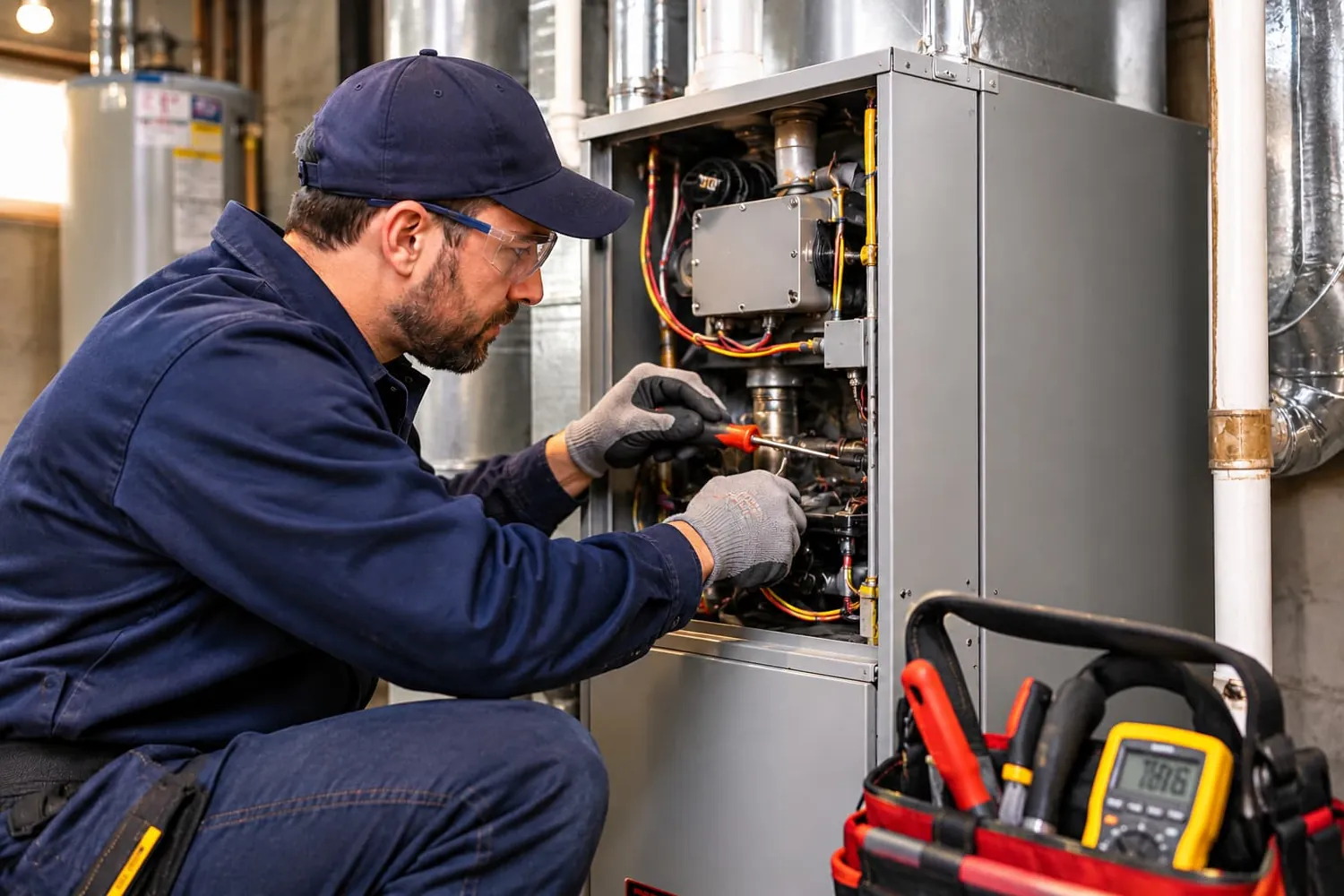
Furnace repair begins with the symptom rather than a guess at the part. A system may be completely unresponsive, may start the inducer but fail to light, may light and shut down quickly, or may produce heat while the blower does not distribute it well. Basalt homes can have furnaces in basements, utility closets, garages, crawlspaces, or mechanical rooms, depending on the property type. Access to the filter cabinet, service panel, condensate line, and vent piping helps guide a useful inspection.
For a gas furnace, the normal sequence commonly involves a call from the thermostat, inducer operation, pressure-switch confirmation, ignition, burner lighting, flame proving, and blower startup. A fault in any stage can stop the cycle. Common diagnostic points include the igniter, flame sensor, pressure switch, rollout and limit switches, control board, transformer, inducer assembly, gas valve, blower motor, capacitor, and condensate trap on a high-efficiency unit. A furnace that repeatedly stops and starts may be reacting to restricted airflow, overheating, venting trouble, or a control issue.
An inspection can include checking thermostat operation, electrical connections that are accessible, air filter condition, blower function, burner operation, safety switches, error codes, and the condition of visible intake, exhaust, and condensate components. Ductwork may also be reviewed for disconnected runs, crushed flex duct, closed dampers, or return-air restrictions where accessible. Repair needs depend on the equipment’s make, model, fuel type, age, maintenance history, and the measurements taken during diagnosis. Carbon monoxide alarms remain an important safety layer in homes with fuel-burning appliances.
Furnace repair work in Basalt
| Part | What it does | Signs it is failing |
|---|---|---|
| Air filter | Catches dust before air enters the furnace. | Weak airflow, frequent cycling, or a visibly dirty filter. |
| Thermostat | Signals the furnace when the home needs heat. | The furnace does not start, runs at the wrong time, or does not reach the set temperature. |
| Igniter | Starts the burner ignition sequence. | The blower runs but the burners do not light. |
| Flame sensor | Confirms that a burner flame is present. | Burners light briefly, then shut off. |
| Blower motor | Moves heated air through the duct system. | Little airflow, loud operation, or a blower that does not start. |
Seasonal heating demands in the Roaring Fork Valley
Basalt has four distinct seasons, with cold winter weather and warmer, drier summer conditions typical of Colorado’s interior mountain valleys. Winter nights can create sustained furnace demand, especially in shaded valley locations and homes with north-facing exposures. Snow, freeze-thaw cycles, and changing temperatures make it worthwhile to keep filters current and exterior vent areas visible. During milder months, a heating check can identify worn ignition parts, drainage issues, and airflow restrictions before colder weather returns.
Where we work in Basalt
Also nearby: Carbondale, El Jebel, Aspen, Snowmass Village, Woody Creek, Eagle.
Old Town Basalt
Older houses in the historic core may have remodeled additions, varied insulation, and ductwork altered over time.
Willits
The Willits area includes newer residences and mixed-use buildings with modern mechanical systems and varied access arrangements.
Basalt River Park area
Homes near the Roaring Fork River can experience cold evening valley air during the heating season.
Fryingpan Road corridor
Properties along Fryingpan Road range from in-town residences to valley and hillside homes with different heat-loss patterns.
Southside Basalt
Southside homes may have multi-level floor plans where return-air design and zoning affect room-to-room comfort.
Basalt furnace questions
Why are some rooms colder than others in a Basalt home?
Room temperature differences can result from duct length, return-air placement, closed dampers, insulation gaps, window exposure, or multi-level layouts. Valley and hillside locations can also experience different solar exposure and overnight temperatures.
What should I do if my furnace displays an error code?
Write down the code and note what the furnace was doing when it appeared, such as whether the blower or burners started. The code is a diagnostic clue, but the equipment manual and testing are needed to identify the underlying fault.
What ZIP code is used for Basalt?
Basalt uses ZIP code 81621. Mailing addresses in nearby parts of the Roaring Fork Valley may use other ZIP codes.
Can a clogged filter make a furnace shut off?
Yes, a heavily loaded filter can limit airflow across the heat exchanger. The furnace may then reach its high-temperature limit and cycle off as a safety response.
Why does a high-efficiency furnace have a condensate drain?
A condensing furnace extracts additional heat from exhaust gases, which creates water that must drain through a trap and line. A blockage, freeze concern, or pump problem can interrupt operation on some systems.
Need furnace repair in Basalt?
Tell us your town and what is happening.