Furnace repair in Campo, CO
Furnace repair for Campo homes facing cold, windy weather on Colorado’s High Plains.
Furnace Repair
TownCampo, CO
CountyBaca
ZIP81029
- 5years of experience
- 2,000+customers served
- 15team members
- 4.9/5from 345 Google reviews
Heating concerns in Campo’s open High Plains setting
Campo is a small town in southeastern Colorado’s Baca County, close to the Oklahoma state line. U.S. Highway 287 runs through the community, where homes and outbuildings are spread across an open, largely treeless landscape. The town’s exposure to persistent wind, wide temperature swings, and blowing dust can matter when a forced-air heating system is running for long stretches. Older homes may have different duct layouts, venting routes, and insulation levels than newer rural construction.
Wind exposure
Campo’s open terrain offers little protection from winter wind. Air leakage around doors, windows, attic hatches, and utility penetrations can make a furnace run longer and reveal comfort differences from room to room.
Dust and dry air
Dry conditions and windblown soil can add dust to return-air pathways and filters. A loaded filter restricts airflow, which can contribute to high-limit shutdowns and reduced heat delivery.
Rural utility arrangements
Homes outside the compact town area can have different fuel and electrical arrangements than houses on a denser town block. Furnace diagnosis starts with identifying the equipment, fuel supply, thermostat controls, and venting configuration already in place.
Older building details
Older houses may have additions, enclosed porches, or later-installed duct runs. These changes can affect return-air balance, register placement, and the path used by combustion venting.
What furnace repair can involve in Campo homes
Many Campo homes use forced-air equipment with a thermostat, filter rack, blower assembly, burners or heating elements, safety switches, and a duct system. The first useful distinction is whether the unit has no power, starts but does not ignite, ignites briefly and shuts down, or runs without moving enough warm air. Those symptoms point toward different parts of the heating sequence. Thermostat settings, breakers, disconnects, furnace doors, and filter condition are practical early checks.
Ignition and airflow faults are common categories in furnace troubleshooting. A gas furnace may have issues involving the igniter, flame sensor, pressure switch, inducer motor, gas valve, burner crossover, limit switch, control board, or condensate drainage on a high-efficiency model. Blower problems can involve a capacitor, relay, motor, wheel, belt on older equipment, or a restriction in the return side of the system. Electric furnaces have their own sequence involving heating strips, sequencers or relays, breakers, and airflow safety controls.
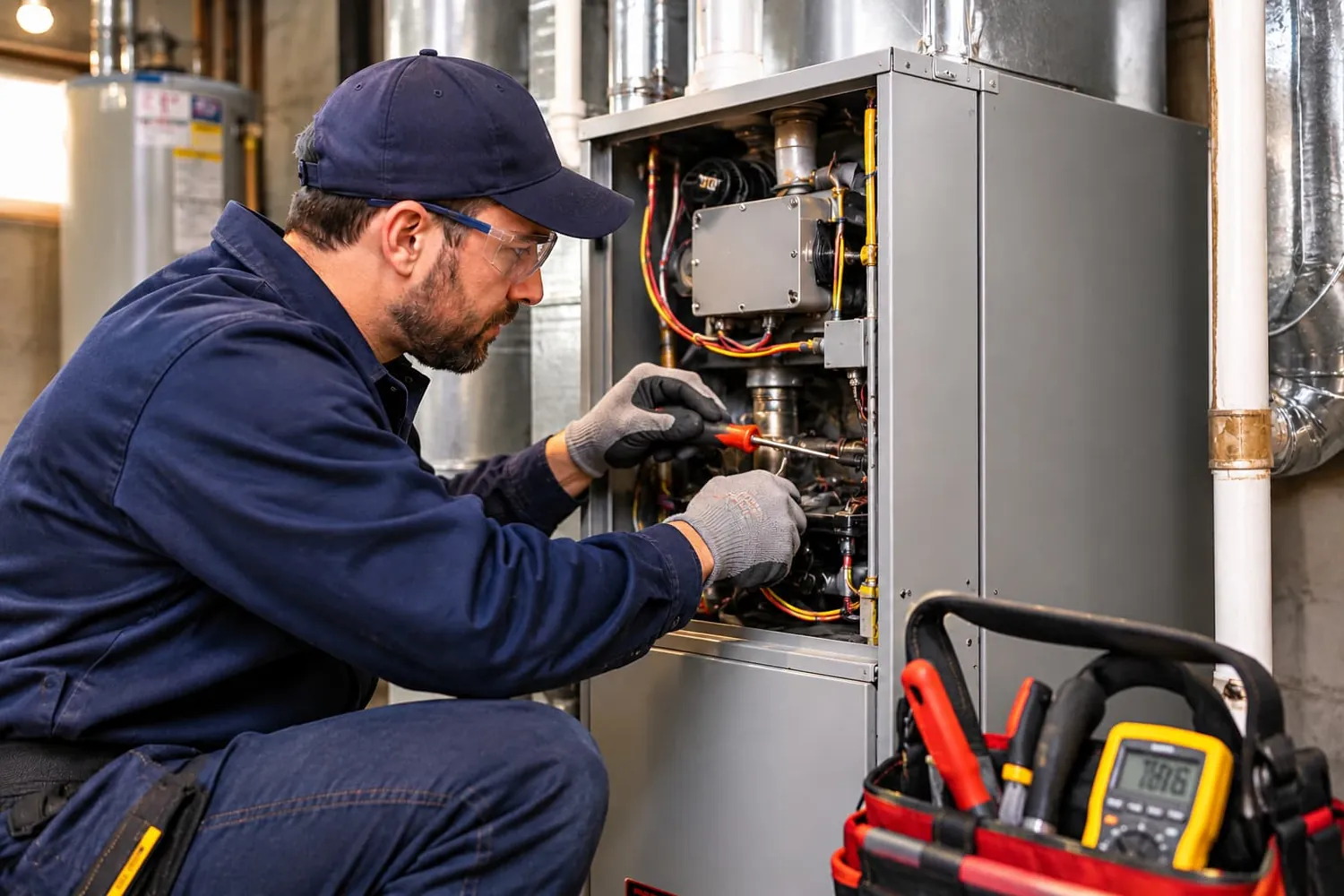
A repair visit can begin with confirming the call for heat at the thermostat and checking the furnace’s operating sequence. It can include inspection of accessible wiring, filter condition, safety controls, blower operation, burners, vent connections, and visible duct concerns. Error codes and diagnostic readings help narrow down whether a component has failed or whether the system is responding to an airflow, venting, drainage, or electrical problem. Combustion-related work should include attention to proper venting and carbon monoxide safety.
Furnace repair work in Campo
| Part | What it does | Signs it is failing |
|---|---|---|
| Air filter | Catches dust before air enters the furnace. | Weak airflow, frequent cycling, or a visibly dirty filter. |
| Thermostat | Signals the furnace when the home needs heat. | The furnace does not start, runs at the wrong time, or does not reach the set temperature. |
| Igniter | Starts the burner ignition sequence. | The blower runs but the burners do not light. |
| Flame sensor | Confirms that a burner flame is present. | Burners light briefly, then shut off. |
| Blower motor | Moves heated air through the duct system. | Little airflow, loud operation, or a blower that does not start. |
Cold nights and wind-driven heat loss
Campo has a semi-arid High Plains climate with hot summers, cold winter periods, and frequent wind. Overnight temperatures can fall sharply, so a furnace problem may become noticeable after the system has been cycling for hours. Wind can increase heat loss through building gaps and can carry dust that affects filters and return-air grilles. Before the heating season, checking filters, thermostat batteries where applicable, accessible vent terminations, and supply registers can help identify simple issues.
Where we work in Campo
Also nearby: Springfield, Vilas, Pritchett, Two Buttes, Walsh.
Campo town center
Homes near the U.S. Highway 287 corridor may have older heating layouts and additions that affect duct routing.
U.S. Highway 287 corridor
Properties along the highway are exposed to the same open-country wind and dust that can affect outdoor vent terminations.
Colorado Highway 27 junction area
This edge of town has open lots and rural-style properties where equipment and utility setups can vary.
East Campo
Homes on the eastern side of town have little terrain shelter from prevailing weather.
Campo furnace questions
What furnace problems are common during Campo cold snaps?
No-heat calls often involve a thermostat issue, a tripped safety switch, a dirty filter, ignition trouble, or a blower that is not operating correctly. The operating sequence and any diagnostic code help separate these possibilities.
Does wind in Campo affect a furnace?
Wind does not repair or damage a furnace by itself, but it can increase a home’s heat loss and make the equipment run longer. Windblown dust can also make filter maintenance more important.
What ZIP code is used for Campo furnace repair?
Campo uses ZIP code 81029. Properties in the surrounding Baca County countryside may use different mailing addresses or routes.
Why does my furnace start and then stop after a few seconds?
A short heating cycle can be related to flame sensing, pressure-switch operation, venting, a limit switch, or thermostat control. The cause depends on whether the burners light and what the blower does afterward.
Should I replace the filter before scheduling furnace service?
If the filter is clearly dirty and you have the correct replacement, changing it is a reasonable first step. If the furnace still will not heat, the filter change does not rule out an ignition, electrical, blower, or safety-control fault.
Need furnace repair in Campo?
Tell us your town and what is happening.