Furnace repair in Colorado Springs, CO
Furnace repair for Colorado Springs homes with no heat, short cycling, or ignition trouble.
Furnace Repair
TownColorado Springs, CO
CountyEl Paso
ZIP80903, 80904, 80905, 80906, 80907, 80909, 80910, 80915, 80916, 80917, 80918, 80919, 80920, 80921, 80922, 80923, 80924, 80925, 80926
Furnace problems in Colorado Springs homes at the foot of Pikes Peak
Colorado Springs sits on the Front Range in El Paso County, with elevations and terrain that vary from the foothills west of town to the flatter eastern neighborhoods. Older houses around Old Colorado City, Downtown, Patty Jewett, and the Old North End often have different heating layouts than newer construction in Briargate, Wolf Ranch, and Banning Lewis Ranch. Many homes use natural-gas forced-air furnaces, while some properties have heat pumps with furnace backup. A furnace issue can come from the heating unit itself, the thermostat, ductwork, electrical controls, or the fuel and venting system.
Older central neighborhoods
Houses in the Old North End, Patty Jewett, and parts of Downtown include older construction and renovated systems. Furnace repairs in these homes may involve legacy duct runs, aging thermostats, metal flues, or equipment installed in basements and utility rooms.
Foothill and west-side terrain
Rockrimmon, Peregrine, and west-side areas near Garden of the Gods sit closer to foothill terrain. Wind exposure and large day-to-night temperature swings can make airflow balance and thermostat placement more noticeable.
Newer northern development
Briargate, Cordera, Wolf Ranch, and Interquest contain many newer homes with high-efficiency furnaces and electronic controls. These systems still need diagnosis when a pressure switch, flame sensor, condensate drain, inducer motor, or control board causes a shutdown.
Dry air and dust
Colorado Springs has a dry climate, and dust can collect at filters, return grilles, blower compartments, and burners. A restricted filter can reduce airflow, raise furnace temperature, and trigger a limit switch.
How furnace repair is approached in Colorado Springs
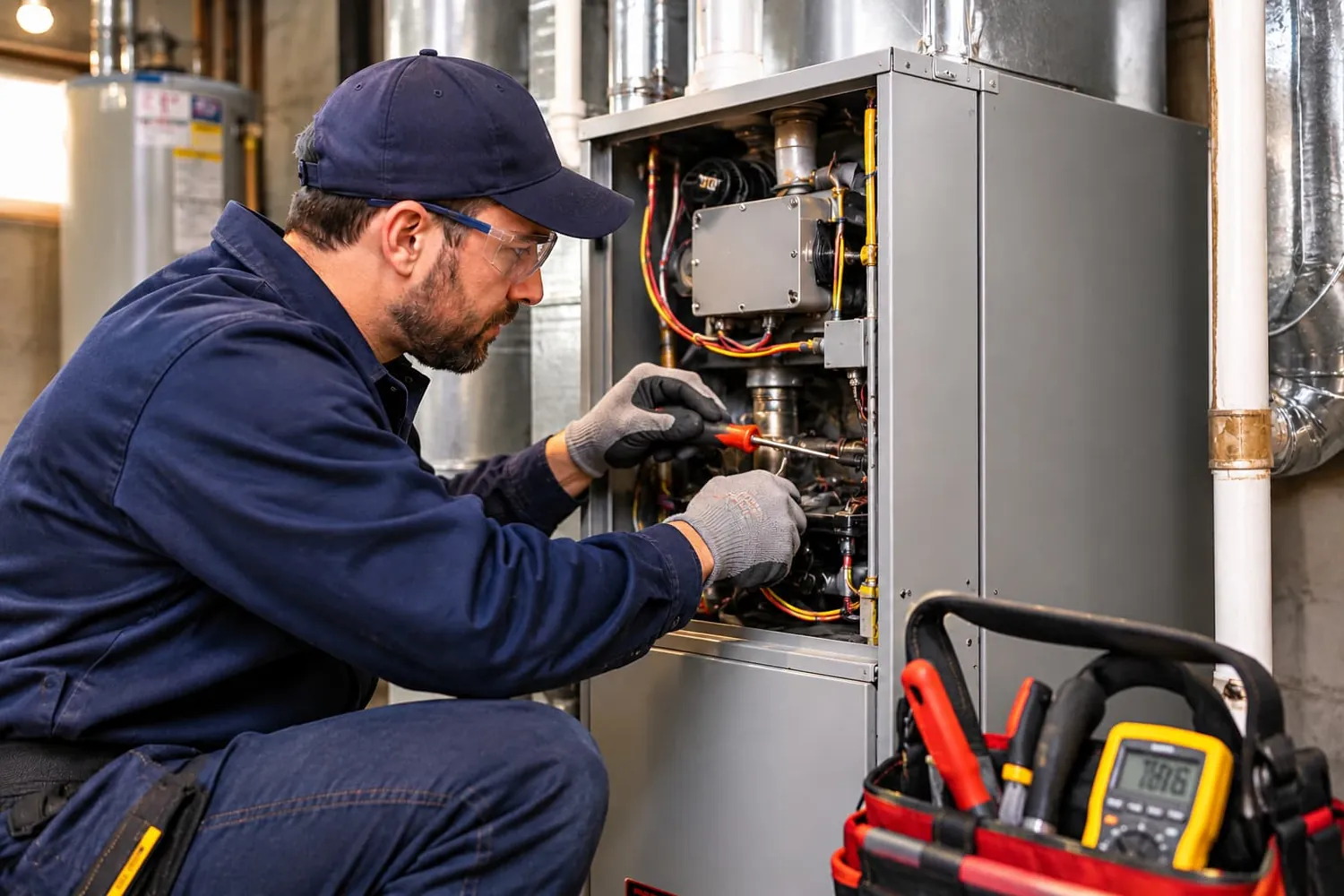
A no-heat diagnosis starts by identifying what the furnace does when there is a call for heat. The thermostat setting, electrical disconnect, circuit breaker, furnace door switch, filter condition, and fault-code display are common first checks. For a gas furnace, the ignition sequence typically moves through the inducer, pressure switch, igniter, gas valve, flame sensor, and circulating blower.
Many reported furnace failures are actually operating symptoms that need a specific cause identified. A unit that starts and stops repeatedly may have overheating, restricted airflow, a dirty flame sensor, venting trouble, or a control issue. Cold air from supply registers can point to a burner that did not stay lit, a blower running without a completed heat cycle, or a thermostat setting problem.
A repair assessment can include the burners, igniter, flame-sensing circuit, pressure tubing, vent connection, blower wheel, capacitor, limit switches, thermostat wiring, and condensate components on condensing equipment. Gas piping and combustion venting require careful inspection when there is an ignition or exhaust concern. Carbon monoxide alarms should be kept operational, and a suspected gas odor should be handled according to the gas utility's safety instructions.
Furnace repair work in Colorado Springs
| Part | What it does | Signs it is failing |
|---|---|---|
| Air filter | Catches dust before air enters the furnace. | Weak airflow, frequent cycling, or a visibly dirty filter. |
| Thermostat | Signals the furnace when the home needs heat. | The furnace does not start, runs at the wrong time, or does not reach the set temperature. |
| Igniter | Starts the burner ignition sequence. | The blower runs but the burners do not light. |
| Flame sensor | Confirms that a burner flame is present. | Burners light briefly, then shut off. |
| Blower motor | Moves heated air through the duct system. | Little airflow, loud operation, or a blower that does not start. |
Front Range weather and home heating
Colorado Springs can have cold winter nights, snow, strong sun, and quick temperature changes. A furnace may cycle more often during cold snaps, while shoulder-season swings can expose thermostat calibration or airflow issues. Wind can also affect homes with drafty doors, attic bypasses, or poorly sealed duct connections. Before winter, replacing the filter and checking that supply and return vents are open can help the heating system operate as intended.
Where we work in Colorado Springs
Also nearby: Manitou Springs, Fountain, Monument, Woodland Park, Falcon, Security-Widefield.
Old Colorado City
Historic homes and additions may have varied duct layouts, basement equipment locations, and older venting arrangements.
Briargate
Many homes have forced-air systems with equipment in basements, utility rooms, or mechanical closets.
Rockrimmon
Foothill exposure and split-level floor plans can make temperature differences between rooms more apparent.
Downtown and Old North End
Older housing stock may contain updated furnaces connected to original or altered duct systems.
Powers corridor
Homes east of Powers Boulevard often include newer heating equipment with electronic ignition and control diagnostics.
Colorado Springs furnace questions
Which Colorado Springs ZIP codes are commonly associated with furnace repair requests?
Colorado Springs addresses commonly use ZIP codes including 80903, 80904, 80905, 80906, 80909, 80918, 80919, 80920, 80921, 80922, and 80923. The equipment type and the symptoms are more useful for diagnosis than the ZIP code alone.
Why does a furnace run but not heat the house?
The blower can run even when the burners do not ignite or do not remain lit. Causes can include an ignition failure, flame-sensing problem, pressure-switch issue, thermostat setting, or safety lockout.
What does short cycling mean on a furnace?
Short cycling means the furnace turns on and off before completing a normal heating cycle. A clogged filter, blocked airflow, overheating, thermostat location, or a component fault can contribute.
Should I change the filter before arranging furnace diagnosis?
If the filter is accessible and visibly loaded with dust, replacing it with the correct size and type is a reasonable basic check. Do not operate the furnace without a filter, and do not force a filter that does not fit.
What should I do if I smell gas near my furnace?
Leave the area if the odor is strong, avoid switches and open flames, and follow the emergency guidance from the gas utility or local emergency services. Do not attempt to relight or repair the furnace yourself.
Need furnace repair in Colorado Springs?
Tell us your town and what is happening.