Furnace repair in Florence, CO
Furnace repair for gas, propane, and electric heating systems in Florence.
Furnace Repair
TownFlorence, CO
CountyFremont
ZIP81226
- 5years of experience
- 2,000+customers served
- 15team members
- 4.9/5from 345 Google reviews
Heating problems in Florence’s older homes and newer edge-of-town housing
Florence sits in Fremont County along the Arkansas River corridor, south of Cañon City and west of Pueblo. The city has a compact historic downtown, including the Florence Historic District, with many late-19th- and early-20th-century houses. Newer homes and larger parcels extend beyond the older street grid. Colorado Highway 67 is a main route through the community.
Older heating layouts
Historic homes can have later furnace replacements connected to original or modified duct routes. Floor registers, wall grilles, crawlspaces, and additions should all be considered when tracking uneven heat or restricted airflow.
Crawlspaces and basements
Florence homes use a mix of foundations, including basements and crawlspaces. Furnace venting, return-air paths, condensate drains, and duct connections may be located in these less-visible areas.
Dry valley conditions
The Arkansas River valley has a dry climate with substantial day-to-night temperature swings. A system may run lightly in the afternoon and then work much harder after sunset.
Town and rural-edge lots
Homes near the center of Florence differ from properties on the city’s edges, where equipment may be in garages, utility rooms, outbuildings, or mechanical closets. The fuel type and venting arrangement need to be identified before repair work starts.
How furnace repair is approached in Florence homes
Most forced-air systems have a thermostat, furnace cabinet, return duct, supply ducts, filter rack, blower, heat exchanger, burners or electric heat strips, and venting components. Florence homes may use natural gas, propane, or electric heat depending on the property and available utilities. Identifying the equipment model, fuel source, and vent type is a useful first step when a furnace stops heating.
A furnace that will not start can have a thermostat setting issue, a tripped breaker, a blocked filter, a failed igniter, a dirty flame sensor, a pressure-switch problem, or a control-board fault. Short cycling can also come from overheating caused by low airflow, an oversized system, or a venting issue. Rooms that stay cold may point to duct leakage, closed dampers, disconnected runs, or an undersized return-air path.
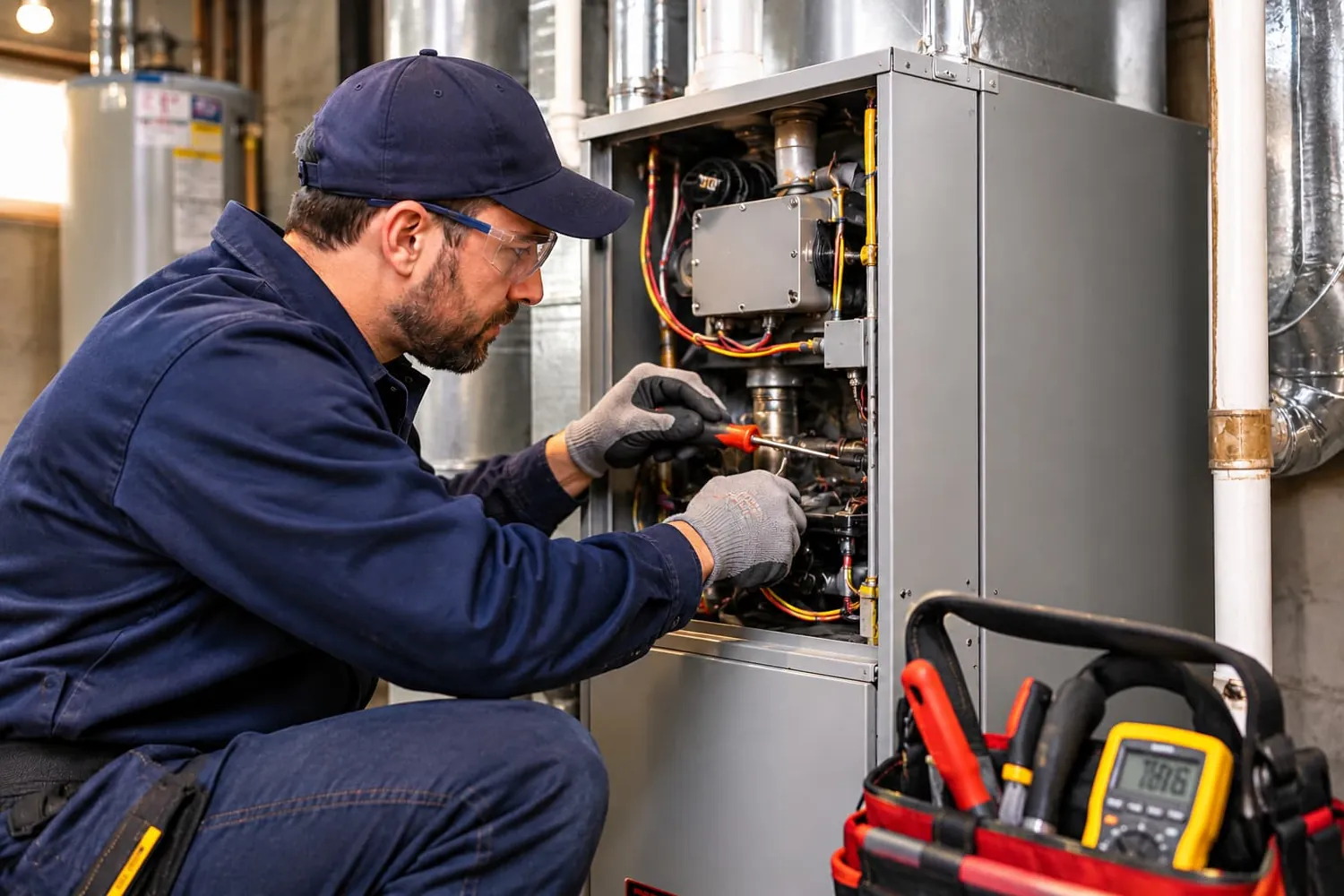
A repair visit typically begins with thermostat operation and a visual check of the furnace and accessible ductwork. Diagnostic work can include checking the filter, inducer, ignition sequence, burner flame, blower operation, safety switches, electrical connections, gas pressure where applicable, and vent pipe condition. The findings help separate a part failure from an airflow, combustion, drainage, or control issue.
Furnace repair work in Florence
| Part | What it does | Signs it is failing |
|---|---|---|
| Air filter | Catches dust before air enters the furnace. | Weak airflow, frequent cycling, or a visibly dirty filter. |
| Thermostat | Signals the furnace when the home needs heat. | The furnace does not start, runs at the wrong time, or does not reach the set temperature. |
| Igniter | Starts the burner ignition sequence. | The blower runs but the burners do not light. |
| Flame sensor | Confirms that a burner flame is present. | Burners light briefly, then shut off. |
| Blower motor | Moves heated air through the duct system. | Little airflow, loud operation, or a blower that does not start. |
Cold nights and shoulder-season changes in Florence
Florence’s semi-arid climate brings cool winter weather and strong temperature changes between daytime and nighttime. Furnaces can cycle frequently during cold spells, while milder sunny days may expose thermostat placement or airflow balance problems. Dust can collect in filters and return grilles during dry periods. Before winter, it is useful to check filter condition, clear the area around the furnace, and make sure supply and return registers are open.
Where we work in Florence
Also nearby: Cañon City, Penrose, Rockvale, Williamsburg, Pueblo West, Brookside.
Downtown Florence
Older homes near the central business district may have remodeled mechanical spaces and altered duct runs.
Florence Historic District
Historic housing can have varied insulation levels, older floor plans, and heating equipment added during later renovations.
North Florence
Homes on the north side can include both established residential streets and properties with different utility layouts.
South Florence
South Florence includes residential areas where furnace access may be through garages, closets, basements, or crawlspaces.
East Florence
Eastern sections include homes where duct distribution and return-air placement can affect room-to-room comfort.
West Florence
West Florence properties may have larger lots and equipment locations outside the main living area.
Florence furnace questions
What ZIP code is used for furnace repair in Florence?
Florence uses ZIP code 81226. Confirming the service address and equipment location helps identify access and the type of heating system installed.
Why does my Florence furnace run but not heat the house evenly?
A running furnace does not always mean air is reaching every room properly. A dirty filter, weak blower, duct leak, closed damper, disconnected duct, or inadequate return air can contribute to uneven temperatures.
What should I check before calling about no heat?
Check that the thermostat is set to heat, the temperature setting is above room temperature, and the furnace switch and breakers are on. Replace a heavily loaded filter if the system uses one, but do not bypass safety controls or repeatedly reset a furnace that shuts down.
Can a clogged filter cause a furnace to shut off?
Yes. A blocked filter can reduce airflow across the heat exchanger and cause the high-limit switch to stop the burners. The furnace may restart after cooling, creating a short-cycling pattern.
Why is there water around a high-efficiency furnace?
High-efficiency condensing furnaces produce water during normal operation and use a condensate trap and drain line. A blocked drain, cracked tubing, frozen discharge point, or failed condensate pump can cause water to appear around the unit.
Need furnace repair in Florence?
Tell us your town and what is happening.