Furnace repair in Grand Junction, CO
Furnace repair for Grand Junction homes with no heat, short cycling, blower trouble, or uneven rooms.
Furnace Repair
TownGrand Junction, CO
CountyMesa
ZIP81501, 81503, 81504, 81505, 81506, 81507
- 5years of experience
- 2,000+customers served
- 15team members
- 4.9/5from 345 Google reviews
Furnace service considerations in Grand Junction's high-desert setting
Grand Junction is the largest city on Colorado's Western Slope and the county seat of Mesa County. It sits near the Colorado River and Gunnison River, with the Book Cliffs to the north and Colorado National Monument to the west. The Redlands, Orchard Mesa, downtown, North Avenue corridor, and north-side neighborhoods have housing that ranges from older homes to newer subdivisions. Dry air, dust, elevation, winter nights, and strong sun exposure can all influence how a heating system performs in different parts of the city.
Dry climate and return-air dust
Grand Junction's dry climate can contribute to dust collecting in filters, return grilles, blower wheels, and indoor coils. A filter that is too restrictive, incorrectly installed, or overdue for replacement can reduce airflow through the furnace. Low airflow may lead to high-limit cycling, hotter cabinet temperatures, and rooms that take longer to warm.
Evaporative cooler and furnace duct systems
Some homes use evaporative cooling equipment during the warm season and forced-air heat during colder weather. Depending on the setup, duct connections, dampers, roof penetrations, and seasonal changeover can affect airflow. A furnace issue may involve the heating equipment, but it can also involve a damper position or duct opening associated with the cooling arrangement.
Redlands and Orchard Mesa exposure
Homes on the Redlands and Orchard Mesa can have different elevation, slope, and sun exposure than homes closer to central Grand Junction. A west-facing room, a shaded lower level, or a room above a garage may heat differently from the rest of the house. Thermostat location and duct balancing matter when a furnace appears to run normally but comfort varies by room.
High-efficiency venting and condensate
Modern condensing furnaces use PVC vent pipes and produce condensate during heating operation. The intake, exhaust, drain trap, tubing, and condensate line must remain clear and correctly routed. Debris, a frozen drain section during cold weather, or a disconnected vent can interrupt the pressure-switch circuit and shut the unit down.
Diagnosing furnace failures across Grand Junction
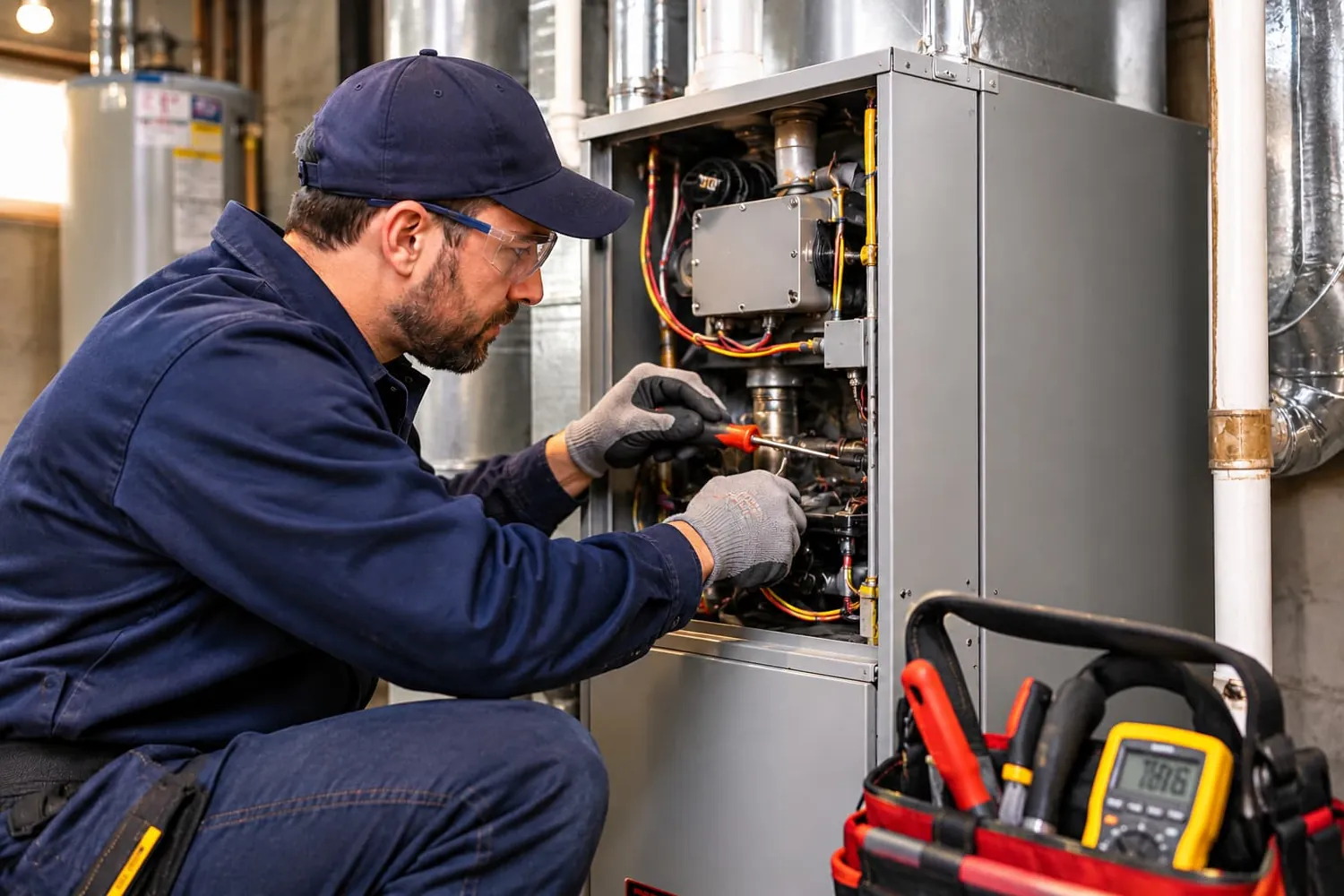
No-heat troubleshooting starts with the heating call and the furnace's safety sequence. The thermostat should be set to heat, the furnace should have power, and the blower compartment door must be seated so its safety switch closes. From there, diagnosis can include the inducer motor, pressure switch, igniter, burners, flame sensor, gas valve, limit switches, rollout switches, and control board.
A furnace that starts, heats briefly, and stops may be short cycling for several reasons. Dirty filters and restricted ducts can cause overheating, while a dirty flame sensor can stop burner operation shortly after ignition. Oversized equipment, thermostat placement, blocked vents, and control problems can also produce repeated cycles, so the timing and sequence of the shutdown are useful details.
A complete airflow assessment looks at both the furnace and the distribution system. The blower motor, capacitor, wheel, return ducts, supply trunks, branch runs, dampers, registers, and indoor coil can all restrict air movement. If the equipment is part of a heat pump or air-conditioning system, the thermostat wiring and shared air handler components may need to be considered as well.
Furnace repair work in Grand Junction
| Part | What it does | Signs it is failing |
|---|---|---|
| Air filter | Catches dust before air enters the furnace. | Weak airflow, frequent cycling, or a visibly dirty filter. |
| Thermostat | Signals the furnace when the home needs heat. | The furnace does not start, runs at the wrong time, or does not reach the set temperature. |
| Igniter | Starts the burner ignition sequence. | The blower runs but the burners do not light. |
| Flame sensor | Confirms that a burner flame is present. | Burners light briefly, then shut off. |
| Blower motor | Moves heated air through the duct system. | Little airflow, loud operation, or a blower that does not start. |
Heating through Grand Junction winters
Grand Junction has a semi-arid climate with sunny days, dry conditions, and cold winter nights. Day-to-night swings can make a furnace cycle more often after sunset, especially in homes with leaky ducts or uneven insulation. Windblown dust is a year-round filter concern, while winter cold can reveal venting and condensate-drain issues on high-efficiency units. Seasonal maintenance should include checking filters, thermostat operation, accessible vent terminations, and carbon monoxide alarms.
Where we work in Grand Junction
Also nearby: Fruita, Palisade, Clifton, Palisade, Loma, De Beque.
Downtown Grand Junction
Older homes and mixed-use buildings downtown may have replacement furnaces tied into older duct, crawlspace, or flue arrangements.
The Redlands
Redlands homes can have hillside exposure, larger floor plans, and room-to-room temperature differences related to sun and elevation.
Orchard Mesa
Orchard Mesa residences may have varied lot sizes and heating layouts across areas above the Colorado River.
North Avenue corridor
Housing near North Avenue ranges in age, making equipment type, venting method, and duct condition important to verify.
North Grand Junction
North-side neighborhoods include newer and established homes where high-efficiency furnaces and sidewall vents may be present.
West Grand Junction
Homes toward the Colorado National Monument side of the city can have strong afternoon sun and exposed exterior walls.
Grand Junction furnace questions
Which ZIP codes are used for Grand Junction furnace repair?
Grand Junction ZIP codes include 81501, 81503, 81504, 81505, 81506, and 81507. A full address helps distinguish city locations from nearby Mesa County communities.
Can an evaporative cooler affect furnace airflow?
It can, depending on the duct design and seasonal dampers. An open damper, disconnected section, or roof-related duct opening can reduce heated air delivery or allow unwanted outdoor air into the system.
Why is one room in my Redlands home colder than the rest?
Sun exposure, room location, duct length, insulation, return-air access, and damper settings can all affect a single room. The furnace may be producing heat normally while the distribution system needs attention.
What does a pressure-switch error mean on a condensing furnace?
The furnace is not confirming the draft conditions it needs before ignition. Causes can include an inducer issue, blocked intake or exhaust pipe, damaged pressure tubing, condensate drainage trouble, or the switch itself.
Should I close unused supply registers to save heat?
Closing many registers can increase static pressure and reduce airflow through the furnace. It is generally better to address balancing with appropriate duct, damper, thermostat, or insulation evaluation rather than shutting multiple outlets.
Need furnace repair in Grand Junction?
Tell us your town and what is happening.