Furnace repair in Kittredge, CO
Furnace repair information for Kittredge homes along Bear Creek and Colorado 74.
Furnace Repair
TownKittredge, CO
CountyJefferson
ZIP80457
Furnace concerns in Kittredge foothill homes
Kittredge is an unincorporated Jefferson County community in the Bear Creek valley, west of Denver and east of Evergreen. Colorado 74 follows the creek through town, and homes sit among wooded slopes, narrow valley lots, and the roadway corridor. The community includes older mountain cabins, remodeled properties, and newer homes built into the foothills. Elevation, shaded sites, and changing weather can all affect indoor heating needs.
Mountain construction and venting
Many homes in the Kittredge area use natural-gas forced-air furnaces with metal flues or direct-vent equipment. A furnace inspection should include the vent connector, termination, combustion-air path, and clearances around the appliance.
Wooded lots and outdoor terminals
Pine needles, snow, and windblown debris can collect around exterior intake and exhaust terminations. High-efficiency furnaces need both pipes kept open so the pressure switch can operate correctly.
Cabins, additions, and remodels
Older cabins that have been expanded may have rooms with different insulation levels or duct runs added at separate times. That can show up as a warm main room and colder bedrooms, even when the furnace itself is producing heat.
Bear Creek valley conditions
The valley can hold cold air during clear winter nights, particularly in lower areas near Bear Creek. Longer heating cycles put added attention on filter condition, blower operation, and thermostat setbacks.
How furnace diagnosis applies to Kittredge homes
A no-heat call often starts with the thermostat, electrical disconnect, furnace switch, breaker, air filter, and condensate system. On a gas furnace, the normal heating sequence includes a call for heat, draft inducer operation, pressure-switch proof, igniter operation, burner ignition, flame sensing, and blower startup. A failure at any point can leave the system locked out or circulating unheated air. Error codes stored on the control board can help narrow the inspection.
Common faults include a dirty flame sensor, failed hot-surface igniter, blocked condensate trap, worn inducer motor, weak capacitor, and limit-switch trips caused by restricted airflow. Older standard-efficiency furnaces may have standing pilot or intermittent-pilot components, while newer condensing units use PVC intake and exhaust piping. A cracked heat exchanger, gas-valve issue, or combustion concern needs a proper equipment inspection rather than repeated resets. Filter size and installation direction also matter because a collapsed or overly restrictive filter can cause overheating.
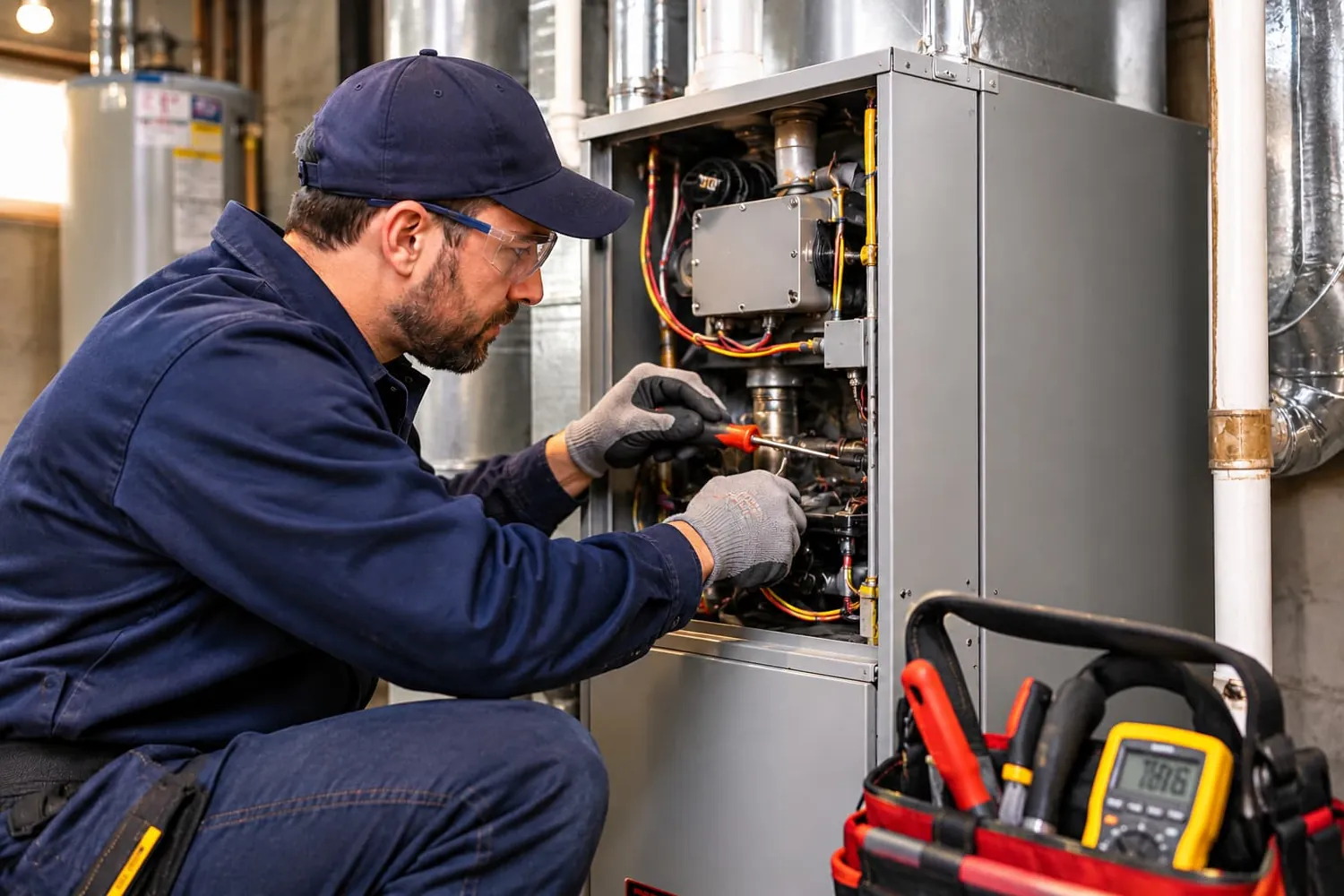
A furnace repair visit can include checking voltage, control-board signals, ignition parts, safeties, blower amperage, temperature rise, and gas-furnace combustion components. The duct system may also be considered when certain rooms stay cool or airflow drops at distant registers. Technicians commonly record the model and serial information before selecting replacement parts, since igniters, pressure switches, and boards are equipment-specific. Clearing snow and stored items away from the furnace and exterior vent locations makes the equipment easier to inspect.
Furnace repair work in Kittredge
| Part | What it does | Signs it is failing |
|---|---|---|
| Air filter | Catches dust before air enters the furnace. | Weak airflow, frequent cycling, or a visibly dirty filter. |
| Thermostat | Signals the furnace when the home needs heat. | The furnace does not start, runs at the wrong time, or does not reach the set temperature. |
| Igniter | Starts the burner ignition sequence. | The blower runs but the burners do not light. |
| Flame sensor | Confirms that a burner flame is present. | Burners light briefly, then shut off. |
| Blower motor | Moves heated air through the duct system. | Little airflow, loud operation, or a blower that does not start. |
Cold nights and shoulder seasons in Kittredge
Kittredge has a foothill climate with snowy periods in winter and large temperature swings in spring and fall. A sunny afternoon can be followed by a much colder night, causing the furnace to cycle again after a daytime setback. Snow accumulation around a sidewall vent can interfere with condensing-furnace intake or exhaust piping. Before winter, check filters, confirm supply registers are open, and keep the area around the furnace clear.
Where we work in Kittredge
Also nearby: Evergreen, Idledale, Indian Hills, Morrison, Conifer.
Kittredge Park area
Homes near the park and Bear Creek can be shaded by mature trees, which can increase heating demand in winter.
Bear Creek corridor
Properties along the valley floor may experience colder overnight air than homes on more exposed slopes.
Colorado 74 corridor
Homes along the highway include older structures and remodels where duct additions may vary from room to room.
Parmalee Gulch area
Hillside properties can have longer duct runs and rooms with different sun exposure.
Kittredge furnace questions
What ZIP code serves Kittredge, Colorado?
Kittredge uses ZIP code 80457. Address details are useful when discussing a home’s location in the Bear Creek valley.
Why does my furnace run but the house stays cool in Kittredge?
A furnace can run without delivering enough heat because of airflow restrictions, a blower problem, duct leakage, or an undersized return path. Foothill homes with additions can also have rooms that heat differently from the original structure.
Can snow affect a high-efficiency furnace?
Yes. Snow can block the outdoor intake or exhaust pipes on a condensing furnace. Both terminations need to remain clear, and no one should modify vent piping without following the equipment installation requirements.
Why does my furnace shut off shortly after starting?
A furnace may stop early when a flame sensor does not confirm ignition, a pressure switch does not close, or a limit switch opens from overheating. The sequence of operation and any control-board code help identify the source.
What should be checked before calling about no heat?
Set the thermostat to heat and raise the setpoint above room temperature. Then check the furnace switch, breaker, filter, and whether exterior vent pipes are blocked by snow or debris.
Need furnace repair in Kittredge?
Tell us your town and what is happening.