Furnace repair in Loveland, CO
Furnace repair for Loveland homes through Colorado’s cold Front Range winters.
Furnace Repair
TownLoveland, CO
CountyLarimer
ZIP80537, 80538
- 5years of experience
- 2,000+customers served
- 15team members
- 4.9/5from 345 Google reviews
Furnace concerns from central Loveland to the foothills edge
Loveland is in Larimer County along the Front Range, west of Interstate 25 and north of Berthoud. Its housing ranges from older neighborhoods around downtown and Lake Loveland to newer homes in northwest and southeast parts of the city. The Big Thompson River runs through Loveland, and the city’s western side rises toward the foothills. Those differences in home age, elevation, exposure, and duct design can shape how a forced-air heating system performs.
Older central-city housing
Homes near downtown Loveland and Lake Loveland can have additions, remodeled basements, and duct changes made over different periods. Heating imbalance between original rooms and additions can point to airflow distribution rather than one failed part.
Foothills exposure
West Loveland properties can experience stronger winds and colder conditions than more sheltered locations farther east. Exterior vent pipes and furnace combustion-air terminations need clear space around them.
The Big Thompson corridor
Homes near the river can have crawlspaces, basements, or utility areas where moisture and drainage deserve attention. For condensing furnaces, the condensate trap, tubing, pump if present, and drain path need to function properly.
High-use winter heating
Cold snaps increase runtime and reveal weak igniters, flame sensors, blower capacitors, and draft-inducer motors. A filter that is overdue for replacement can also reduce airflow during the part of the year when the furnace works hardest.
Diagnosing forced-air furnace problems in Loveland
A typical Loveland heating system uses a gas furnace and central air conditioner on one duct system. The furnace cabinet contains controls and safety switches, while the blower moves heated air across the supply ducts and pulls household air back through the return. Depending on the equipment, combustion gases leave through a metal flue or through PVC vent piping. Understanding which system is installed matters when diagnosing no heat, water around the furnace, or vent-related shutdowns.
When a furnace will not ignite, the issue may be at the thermostat, transformer, control board, pressure switch, inducer, igniter, gas valve, burners, or flame-sensing circuit. A system that lights and then shuts down can have a flame-proving problem or an airflow-related limit switch trip. If the blower runs continuously, the cause may involve the thermostat wiring, a control-board setting, a safety condition, or a blower relay. Error codes displayed through the furnace inspection window should be recorded before power is cycled.
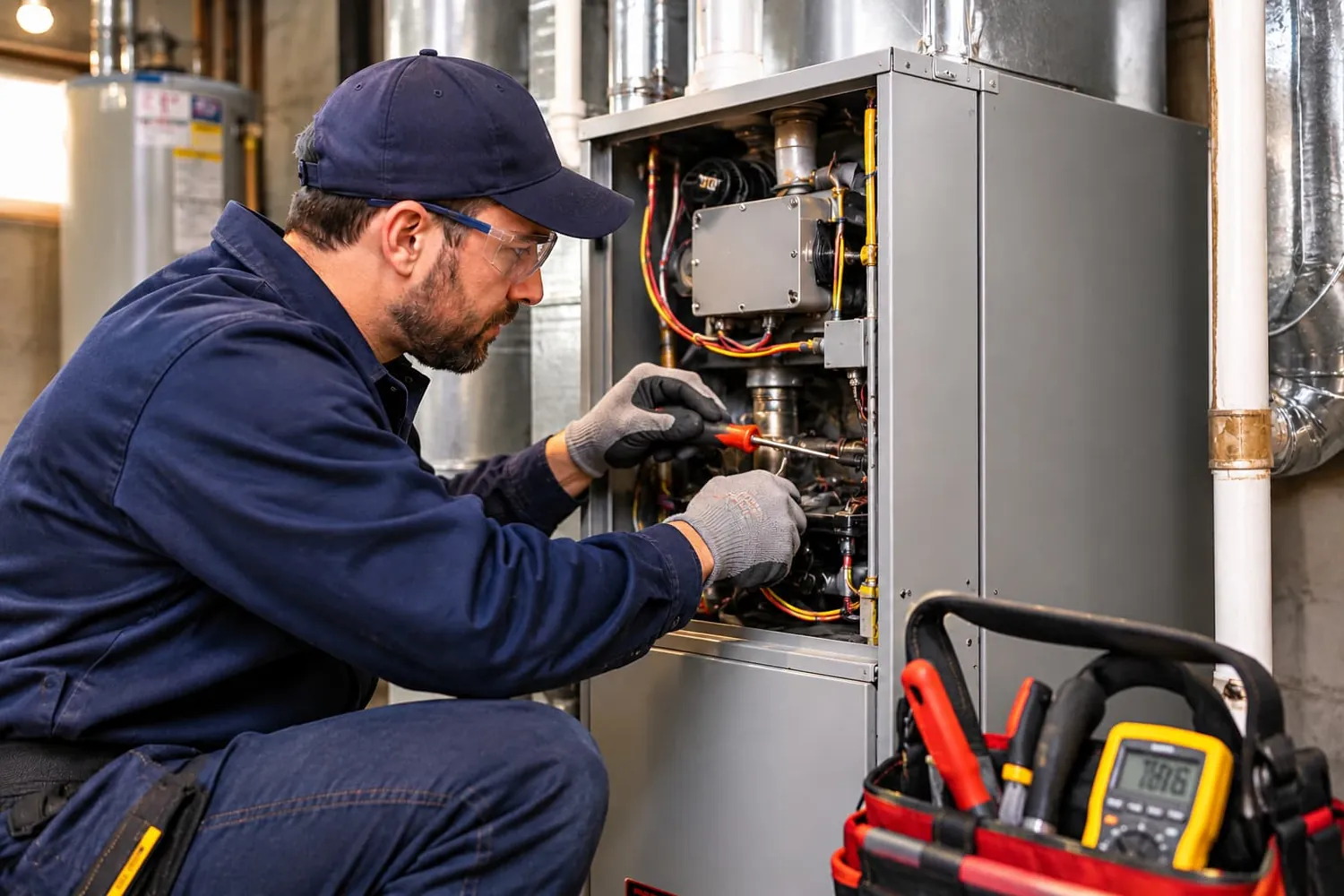
A repair assessment can check the air filter, thermostat call, disconnect switch, circuit breaker, condensate system, burner compartment, and diagnostic codes. Component testing can include electrical readings, blower operation, inducer performance, safety circuits, ignition, and temperature rise across the furnace. Poor heat delivery may also require looking at return grilles, supply registers, dampers, duct leakage, or an obstructed evaporator coil. Fuel-burning equipment requires intact venting and operational carbon monoxide alarms.
Furnace repair work in Loveland
| Part | What it does | Signs it is failing |
|---|---|---|
| Air filter | Catches dust before air enters the furnace. | Weak airflow, frequent cycling, or a visibly dirty filter. |
| Thermostat | Signals the furnace when the home needs heat. | The furnace does not start, runs at the wrong time, or does not reach the set temperature. |
| Igniter | Starts the burner ignition sequence. | The blower runs but the burners do not light. |
| Flame sensor | Confirms that a burner flame is present. | Burners light briefly, then shut off. |
| Blower motor | Moves heated air through the duct system. | Little airflow, loud operation, or a blower that does not start. |
Winter conditions around Loveland
Loveland’s climate brings dry air, snow events, winter wind, and changing temperatures typical of the Colorado Front Range. A furnace may be quiet during a warm stretch, then run much longer when overnight temperatures fall below freezing. Wind can cool exposed walls and create noticeable room-to-room differences, especially in homes with additions or upper floors. Keep snow, ice, mulch, and stored items away from outdoor furnace vent openings.
Where we work in Loveland
Also nearby: Berthoud, Johnstown, Windsor, Fort Collins, Estes Park, Longmont.
Downtown Loveland
Older homes and renovated properties in the central city may have a mix of original and updated heating distribution.
Lake Loveland
Homes around the lake include established housing where duct alterations and insulation differences can affect comfort.
Mariana Butte
West-side homes near the foothills can have wind exposure and varied floor plans that influence heating loads.
Centerra
This southeast Loveland area has newer commercial and residential development with modern thermostat and HVAC controls.
Northwest Loveland
Newer and established neighborhoods in this part of the city can use different furnace efficiencies and venting arrangements.
Loveland furnace questions
Which Loveland ZIP codes are commonly associated with furnace repair?
Loveland uses ZIP codes 80537 and 80538. The city includes both older central neighborhoods and newer outer areas, so the equipment installed can vary widely.
What does a flashing light on my furnace mean?
Many furnaces use an LED to show a diagnostic code when a safety circuit or operating sequence fails. Count the flashes and check the code chart on the furnace panel before resetting power.
Why is there water near my furnace?
A high-efficiency furnace produces condensate, and water can appear if the drain trap, tubing, pump, or drain line is blocked or disconnected. Water may also come from air-conditioning equipment if the system has recently been cooling.
Can a dirty filter make a furnace shut off?
A heavily loaded filter can restrict return airflow and contribute to overheating. The high-limit switch may then stop burner operation until the furnace cools.
Why does my furnace make a squealing sound?
Squealing can come from a blower motor, belt on older belt-driven equipment, wheel, or bearing-related issue. The sound should be evaluated rather than ignored, especially if airflow changes at the same time.
Need furnace repair in Loveland?
Tell us your town and what is happening.