Furnace repair in Red Feather Lakes, CO
Furnace repair for Red Feather Lakes cabins and homes during cold-weather heating problems.
Furnace Repair
TownRed Feather Lakes, CO
CountyLarimer
ZIP80545
- 5years of experience
- 2,000+customers served
- 15team members
- 4.9/5from 345 Google reviews
Furnace repair for Red Feather Lakes’ mountain climate
Red Feather Lakes is a mountain community in northern Larimer County, northwest of Fort Collins. The community is known for its lakes, forest setting, and high elevation in the Front Range foothills. Homes include cabins, seasonal properties, and year-round residences, with building designs and heating layouts that vary widely. Winter conditions make a dependable furnace, clear venting, and adequate airflow especially important when outdoor temperatures fall.
Mountain cold and snow
Long heating cycles during winter can expose weak igniters, failing blower capacitors, dirty flame sensors, and restricted filters. Snow also needs to remain clear of furnace intake and exhaust terminations where those pipes exit the building.
Cabin occupancy patterns
A seasonal cabin may sit unused between visits, so a heating issue may not be discovered until the system is needed. Thermostat batteries, filter condition, power switches, condensate components, and visible vent openings are sensible items to review before cold weather.
Wooded lots
Pine needles, leaves, and windblown debris can collect around exterior equipment openings. High-efficiency furnace venting depends on a clear intake and exhaust path, while conventional venting requires sound flue connections and proper draft.
Varied building construction
Red Feather Lakes homes can range from compact cabins to larger mountain residences with additions and multiple levels. Duct runs, return-air paths, insulation levels, and room exposure can all affect whether heat reaches every space evenly.
Furnace troubleshooting in Red Feather Lakes homes
A furnace repair diagnosis begins by identifying the exact symptom rather than assuming every no-heat call has the same cause. The unit may not receive a thermostat call, may have no electrical power, may fail during ignition, or may shut down after the burners start. Observing the sequence from thermostat call through blower operation gives a clearer path for testing controls and components.
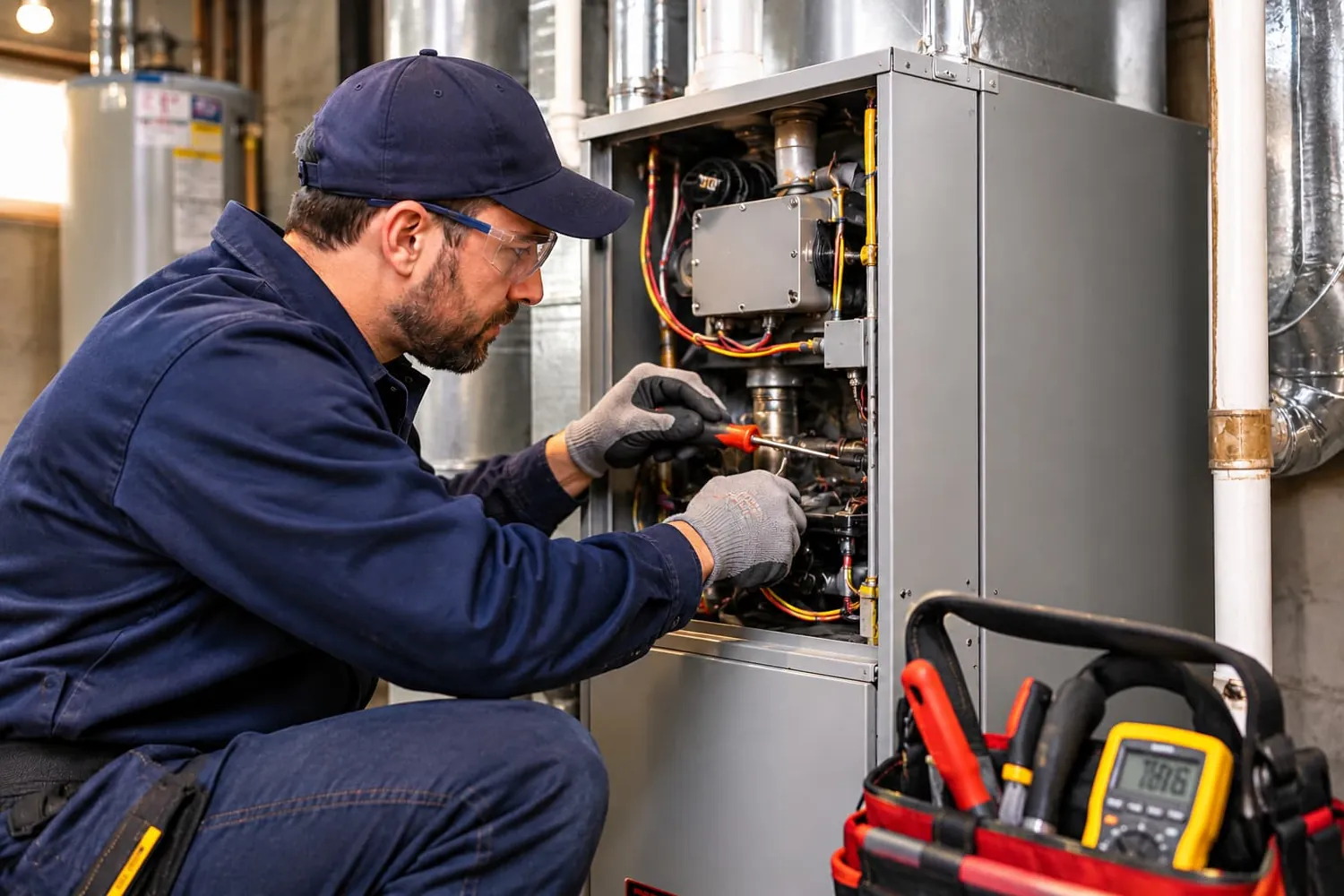
Modern forced-air furnaces commonly use an electronic control board, inducer motor, pressure switch, hot-surface igniter, flame sensor, gas valve, limit switch, and circulating blower. On a condensing model, the condensate trap, drain tubing, intake pipe, and exhaust pipe are also part of the operating system. An interruption in draft proving or condensate drainage can prevent the furnace from progressing to ignition.
Heating complaints also require an airflow check. A dirty filter, blocked return grille, closed registers, weak blower motor, failing capacitor, dirty blower wheel, or duct restriction can cause poor heat delivery or safety shutdowns. A complete visit can include examining accessible components, checking the heating cycle, reviewing fault codes, and confirming that warm air is moving through the supply ducts.
Furnace repair work in Red Feather Lakes
| Part | What it does | Signs it is failing |
|---|---|---|
| Air filter | Catches dust before air enters the furnace. | Weak airflow, frequent cycling, or a visibly dirty filter. |
| Thermostat | Signals the furnace when the home needs heat. | The furnace does not start, runs at the wrong time, or does not reach the set temperature. |
| Igniter | Starts the burner ignition sequence. | The blower runs but the burners do not light. |
| Flame sensor | Confirms that a burner flame is present. | Burners light briefly, then shut off. |
| Blower motor | Moves heated air through the duct system. | Little airflow, loud operation, or a blower that does not start. |
Cold-weather heating in Red Feather Lakes
Red Feather Lakes has a high-elevation mountain climate with cold, snowy winters. Snowfall, wind, and extended freezing conditions can affect exterior vent terminations and increase the hours a furnace operates. Summer is a practical time to inspect filters, accessible ducts, thermostat settings, and venting before the main heating season. During winter, a sudden change in furnace sound, cycling pattern, or delivered heat should not be ignored.
Where we work in Red Feather Lakes
Also nearby: Livermore, Virginia Dale, Bellvue, Laporte, Fort Collins.
Red Feather Lakes village area
Cabins and homes near the central community area can have a mix of older heating equipment and newer furnace installations.
Crystal Lakes
This nearby mountain community includes wooded lots and homes where snow management and vent clearance can affect furnace operation.
Glacier View Meadows
Homes in this area can be spread across larger mountain parcels with varied building sizes and heating layouts.
Fox Acres area
Properties near Fox Acres are in the same high-country climate where cold nights and snow increase heating demand.
Deadman Road area
Homes along the Deadman Road approach can be exposed to forest conditions, elevation changes, and winter weather.
Red Feather Lakes furnace questions
What ZIP code serves Red Feather Lakes, Colorado?
Red Feather Lakes uses ZIP code 80545. The ZIP area includes rural mountain addresses, so a complete street address is important when describing the location of a heating problem.
Why is my Red Feather Lakes furnace not igniting after a snowstorm?
Snow or ice near a high-efficiency furnace’s intake or exhaust termination can affect the draft-proving sequence. Igniter, pressure-switch, condensate, and electrical faults can also prevent ignition, so the full sequence should be checked.
Should I leave the furnace off when a cabin is vacant?
Heating decisions for a vacant mountain home depend on the building, plumbing, insulation, and occupancy plan. A qualified local property or heating professional can help evaluate the system and freeze-protection needs for that specific house.
Why does my furnace run but some cabin rooms stay cold?
Heat loss through exposed walls, duct leakage, long duct runs, closed registers, poor return-air flow, and insulation differences can all contribute. The furnace may be operating normally while distribution to a particular room remains limited.
What does a flashing furnace light mean?
Many furnaces use a flashing control-board light to indicate operating status or a fault code. The meaning varies by manufacturer and model, so the code should be matched to the chart on the furnace panel or in its documentation.
Need furnace repair in Red Feather Lakes?
Tell us your town and what is happening.