Furnace repair in Stoneham, CO
Furnace repair around Stoneham for rural homes and High Plains heating systems.
Furnace Repair
TownStoneham, CO
CountyWeld
ZIP80754
- 5years of experience
- 2,000+customers served
- 15team members
- 4.9/5from 345 Google reviews
Rural furnace repair considerations around Stoneham
Stoneham is an unincorporated community in eastern Weld County on Colorado Highway 14. It lies in a sparsely settled part of the High Plains, where homes, ranch properties, and outbuildings can be widely spaced. Buildings in the area may use different heating arrangements, including forced-air furnaces, unit heaters, and equipment served by propane. Open terrain and long stretches of winter weather place emphasis on safe operation and routine system checks.
Rural fuel arrangements
Some properties outside denser towns use propane rather than utility natural gas. Furnace diagnosis should account for the fuel supply, regulator arrangement, appliance type, and whether other equipment shares the system.
Detached heated spaces
Shops, garages, and agricultural buildings may have suspended unit heaters or separate furnaces. These units have their own venting, thermostats, clearances, and air-distribution needs.
Exposed plains setting
Stoneham’s open setting leaves buildings exposed to wind and cold. Heat loss can be more noticeable at overhead doors, crawlspaces, attic access points, and uninsulated exterior walls.
Dust and nesting debris
Dust can collect in filters and blower compartments, while exterior vent terminations can attract debris. Intake and exhaust openings need to remain unobstructed for equipment that uses direct venting.
Furnace components that need close attention on rural properties
Forced-air furnaces rely on a chain of electrical, fuel, combustion, and airflow components. The thermostat starts the heat call, while the control board monitors safety switches and manages the inducer, ignition, burners, and circulating blower. Propane furnaces use many of the same components as natural-gas models, but fuel-supply issues require particular care. Electric furnaces do not have burners or vent piping but use heating elements, sequencers, relays, and high-limit controls.
A furnace that does not light can have a failed igniter, dirty flame sensor, faulty pressure switch, blocked condensate drain, inducer issue, control-board fault, or fuel-delivery problem. A furnace with a burning smell or reduced airflow may have an overloaded filter, failing blower motor, loose belt on older belt-driven equipment, or debris in the blower assembly. Repeated limit-switch trips indicate that airflow and heat transfer need investigation. Do not keep cycling power to a unit that has an unresolved shutdown condition.
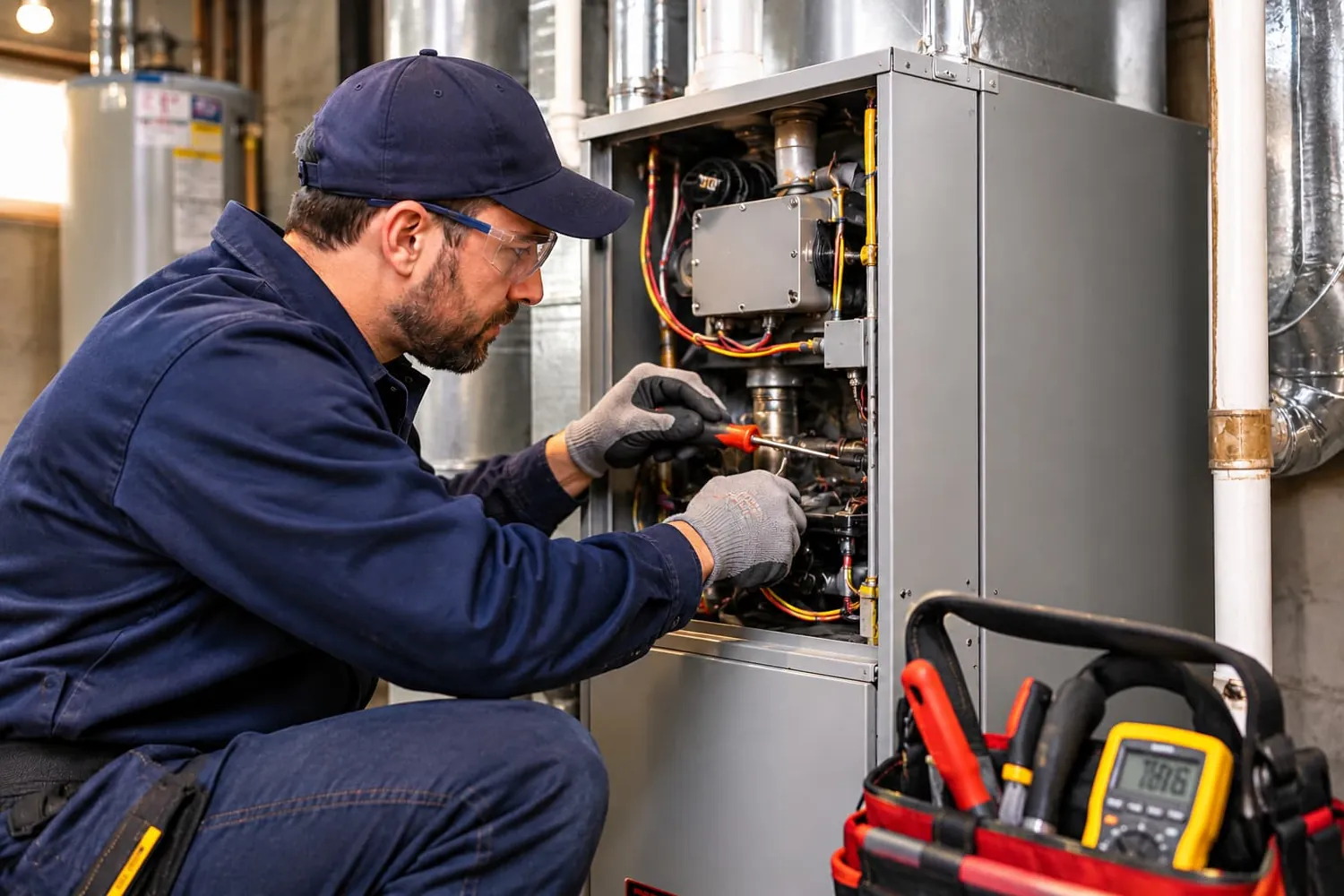
A repair inspection can establish whether the thermostat is calling correctly and whether the furnace is receiving proper power. The technician can inspect the filter, blower, burners, ignition sequence, safety controls, accessible ductwork, and vent path as applicable. On propane equipment, combustion and fuel-related checks should be handled carefully, with attention to manufacturer specifications. The goal is to isolate the actual failed or restricted component and verify normal operation after corrective work.
Furnace repair work in Stoneham
| Part | What it does | Signs it is failing |
|---|---|---|
| Air filter | Catches dust before air enters the furnace. | Weak airflow, frequent cycling, or a visibly dirty filter. |
| Thermostat | Signals the furnace when the home needs heat. | The furnace does not start, runs at the wrong time, or does not reach the set temperature. |
| Igniter | Starts the burner ignition sequence. | The blower runs but the burners do not light. |
| Flame sensor | Confirms that a burner flame is present. | Burners light briefly, then shut off. |
| Blower motor | Moves heated air through the duct system. | Little airflow, loud operation, or a blower that does not start. |
Maintenance through Stoneham’s heating season
Eastern Weld County experiences a dry, windy climate with cold winter periods and rapid weather changes. Dust accumulation can reduce filter life and restrict the air moving across the furnace heat exchanger. Snow or windblown material should not block high-efficiency furnace intake and exhaust pipes. Before winter use, checking filters, thermostat operation, and all accessible registers helps identify simple airflow problems early.
Where we work in Stoneham
Also nearby: Briggsdale, New Raymer, Grover, Ault, Eaton.
Stoneham along Colorado Highway 14
Buildings along the highway may be especially exposed to wind and blowing dust around exterior equipment openings.
North Stoneham
Rural homes north of the highway can have long driveway access and separate heated outbuildings.
South Stoneham
Properties south of Colorado Highway 14 may use detached garages or shops with equipment separate from the residence.
Stoneham rural parcels
Larger parcels can have multiple structures, so each furnace or unit heater should be identified separately during diagnosis.
Stoneham furnace questions
What ZIP code is associated with Stoneham?
Stoneham uses ZIP code 80754. Because the community is rural, the full property address and the building needing heat are useful details.
Can a shop heater and house furnace be serviced as the same system?
They are usually separate appliances, even when they use the same fuel source. Each unit needs its own evaluation of ignition, venting, controls, and airflow.
What is different about a propane furnace problem?
The furnace controls and combustion sequence are similar to other gas furnaces, but the fuel supply and pressure must also be considered. Fuel-related work and combustion checks require appropriate safety procedures.
Why does my furnace trip the high-limit switch?
Restricted airflow is a common reason, including a dirty filter, blocked return, closed registers, or blower problem. A limit switch can also respond to other overheating conditions, so the cause should be tested.
Should furnace vent pipes be checked after snow or wind?
Yes, direct-vent intake and exhaust terminations need an open path. Snow, drifting debris, or animal nesting material can interfere with combustion air or exhaust flow.
Need furnace repair in Stoneham?
Tell us your town and what is happening.