Furnace repair in Del Norte, CO
Furnace repair for Del Norte homes with ignition, blower, and uneven-heating issues.
Furnace Repair
TownDel Norte, CO
CountyRio Grande
ZIP81132
Furnace service considerations in Del Norte’s high valley climate
Del Norte is the Rio Grande County seat in the San Luis Valley of south-central Colorado. U.S. Highway 160 passes through town, and Colorado Highway 112 meets the highway near Del Norte. The Rio Grande flows through the community, while the San Juan Mountains rise west of the valley. Homes in and around town deal with high elevation, dry air, cold winter nights, and substantial temperature changes.
High-elevation combustion
At higher elevations, gas-fired equipment operates with thinner air than it does at sea level. Furnace input, manifold pressure, burner operation, and altitude-related setup must follow the furnace manufacturer’s specifications.
Very cold valley nights
The San Luis Valley is known for cold winter conditions. Long overnight calls for heat can expose weak igniters, aging capacitors, dirty flame sensors, and marginal blower motors.
River and valley moisture
The Rio Grande adds a local river corridor through Del Norte, but the wider valley remains generally dry. Condensing furnaces still create water during normal operation, so condensate tubing, traps, and drains must remain open and protected from freezing.
Older homes and additions
Established houses may have additions, converted rooms, or duct branches installed at different times. Uneven room temperatures can come from return-air limitations, undersized ducts, disconnected runs, or register balancing rather than the furnace alone.
Finding the cause of furnace trouble in Del Norte
A furnace that will not start should be checked in sequence. The thermostat must call for heat, the control board must receive power, the inducer must establish draft, and the ignition system must light the burners. Safety controls monitor this process and can stop operation when they detect an unsafe or incomplete condition.
Many Del Norte homes use forced-air equipment with natural gas heat, a central blower, sheet-metal ducts, and ceiling or floor registers. Common symptoms include a blower that runs continuously, burners that light briefly, a furnace that makes repeated startup attempts, or some rooms that remain cooler than others. Fault codes, voltage testing, pressure readings, and airflow observations can separate electrical, combustion, and duct-related problems.
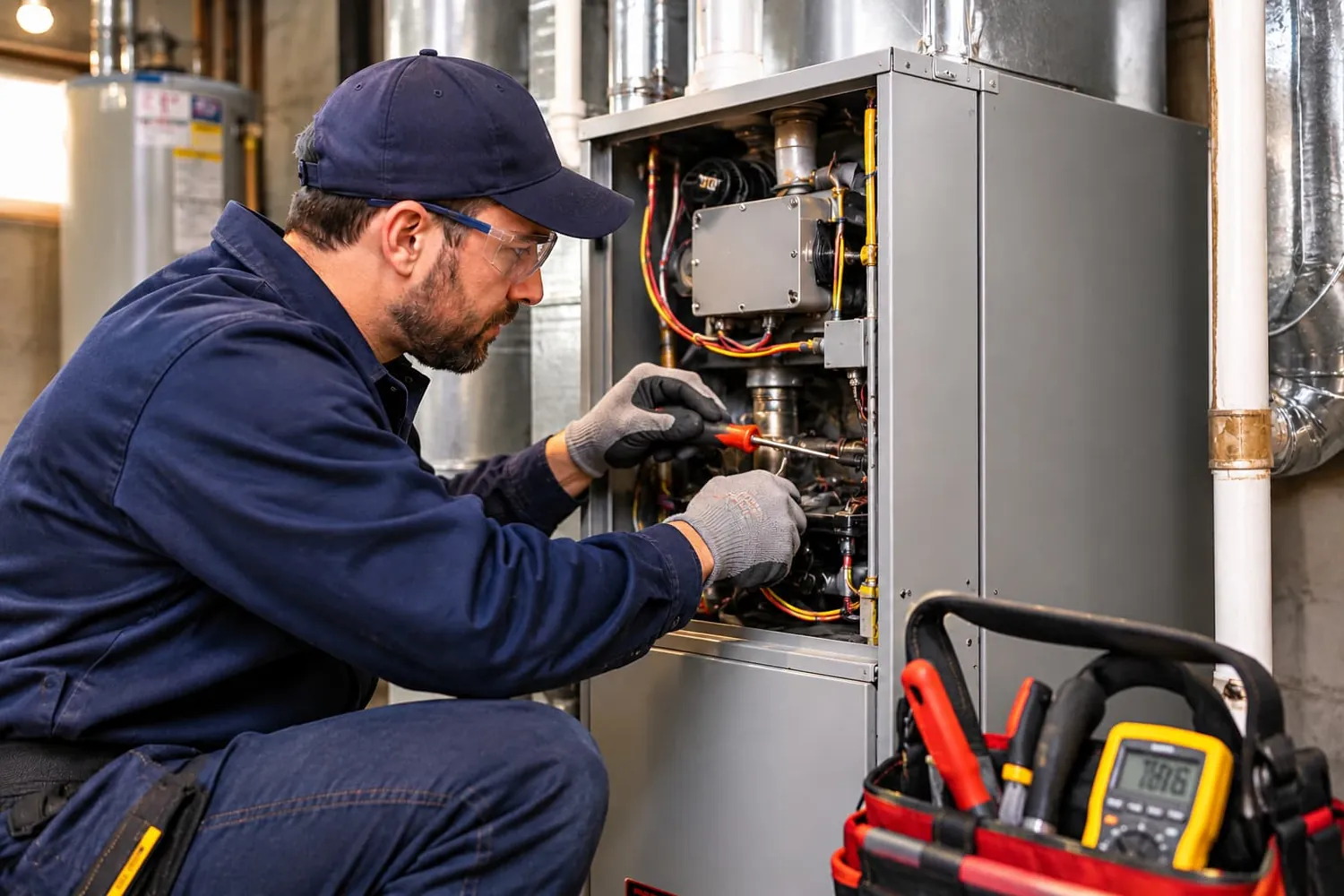
A thorough repair assessment can include the filter rack, blower compartment, burners, flame sensor, igniter, inducer assembly, pressure tubing, vent pipe, and accessible condensate components. The heat exchanger should be evaluated when there are combustion or safety concerns. Carbon monoxide alarms are an important household safety device, but an alarm is not a substitute for diagnosing the furnace and venting system.
Furnace repair work in Del Norte
| Part | What it does | Signs it is failing |
|---|---|---|
| Air filter | Catches dust before air enters the furnace. | Weak airflow, frequent cycling, or a visibly dirty filter. |
| Thermostat | Signals the furnace when the home needs heat. | The furnace does not start, runs at the wrong time, or does not reach the set temperature. |
| Igniter | Starts the burner ignition sequence. | The blower runs but the burners do not light. |
| Flame sensor | Confirms that a burner flame is present. | Burners light briefly, then shut off. |
| Blower motor | Moves heated air through the duct system. | Little airflow, loud operation, or a blower that does not start. |
Winter operation in the San Luis Valley
Del Norte has a high-elevation valley setting where winter nights can be sharply colder than daytime temperatures. A furnace may cycle for extended periods overnight and then run less during sunny afternoons. Dry conditions can increase dust accumulation on filters and blower components. Freezing weather also makes clear vent terminals and properly draining condensing-furnace components important.
Downtown Del Norte
Homes in the town center can include older construction with utility spaces and duct layouts changed over time.
U.S. Highway 160 corridor
Residential properties near the main highway may be exposed to traffic dust and changing wind conditions.
Colorado Highway 112 area
Homes near the highway junction may have open lots where wind reaches exterior vent and intake terminations.
Rio Grande corridor
Properties near the river should keep furnace condensate drainage and exterior piping protected during freezing weather.
Del Norte furnace questions
Does Del Norte’s elevation affect furnace operation?
Elevation can affect combustion because the air is less dense than at lower elevations. Equipment setup and any fuel-conversion or derating work must follow the manufacturer’s instructions for that specific model.
Why is my furnace louder at night?
Colder nighttime temperatures can make the system run longer, which makes blower, inducer, and duct noises easier to notice. Rattling, grinding, squealing, or repeated clicking should be evaluated rather than ignored.
What can freeze on a high-efficiency furnace?
Condensing furnaces produce water that travels through a condensate trap and drain line. Exterior sections, poorly protected runs, or blocked drains can freeze and may lead to pressure-switch or shutdown issues.
What ZIP code covers Del Norte?
Del Norte uses ZIP code 81132. A complete address is useful for identifying locations in town and properties outside the municipal area in Rio Grande County.
Why are some rooms colder than the rest of the house?
The cause may be a duct leak, blocked register, closed damper, limited return air, insulation gap, or a furnace airflow issue. Checking the whole distribution system helps determine whether the furnace is the actual source of the problem.
Need furnace repair in Del Norte?
Tell us your town and what is happening.