Furnace repair in Glenwood Springs, CO
Furnace repair for Glenwood Springs homes dealing with heat, airflow, ignition, and thermostat problems.
Furnace Repair
TownGlenwood Springs, CO
CountyGarfield
ZIP81601
- 5years of experience
- 2,000+customers served
- 15team members
- 4.9/5from 345 Google reviews
Heating issues in Glenwood Springs mountain-valley homes
Glenwood Springs sits where the Colorado River and Roaring Fork River meet in Garfield County. Downtown, West Glenwood, South Glenwood, and the Glenwood Meadows area include a mix of older houses, apartments, newer subdivisions, and commercial corridors. Interstate 70 runs through town, while steep valley walls and nearby canyon terrain shape local winter conditions. Homes on either side of the rivers can have different exposure to sun, wind, and cold air settling in the valley.
Older downtown heating layouts
Older homes around downtown Glenwood Springs may have furnaces added after the original construction. Duct runs can pass through crawlspaces, basements, attics, or later additions. A repair diagnosis should account for the furnace itself as well as disconnected ducts, undersized returns, and accessible shutoff or filter locations.
West Glenwood and highway corridor dust
West Glenwood includes homes near Interstate 70, U.S. 6, and busy commercial areas. Fine dust can collect in return grilles, furnace filters, blower compartments, and flame-sensor areas. Restricted airflow can contribute to high-limit shutdowns, uneven room temperatures, and extra strain on a blower motor.
Valley shade and cold-air pockets
The narrow river valley creates areas with different winter sun exposure. Homes that remain shaded longer can lose indoor heat sooner than homes on open, sunny slopes. This makes thermostat placement, insulation gaps, duct leakage, and furnace cycling worth checking when certain rooms stay cooler.
Snow and roof drainage
Snowy periods can affect high-efficiency furnace venting when intake or exhaust terminations are located low on an exterior wall. Ice, snow, leaves, or windblown debris can obstruct PVC vent pipes. A blocked vent can cause pressure-switch faults or prevent a condensing furnace from completing its ignition sequence.
How furnace troubleshooting fits Glenwood Springs homes
A no-heat call often starts with basic operation checks. The thermostat must call for heat, the furnace disconnect and breaker must be on, and the filter cannot be severely blocked. On a gas furnace, the sequence commonly moves from inducer operation to pressure-switch verification, igniter heating, burner ignition, flame sensing, and blower start-up.
Different symptoms point to different parts. A furnace that starts and stops quickly may have a dirty flame sensor, airflow restriction, limit-switch issue, venting problem, or a thermostat setting concern. A unit that runs but does not move enough air may need inspection of the filter rack, return air path, blower wheel, capacitor, motor, ducts, and supply registers.
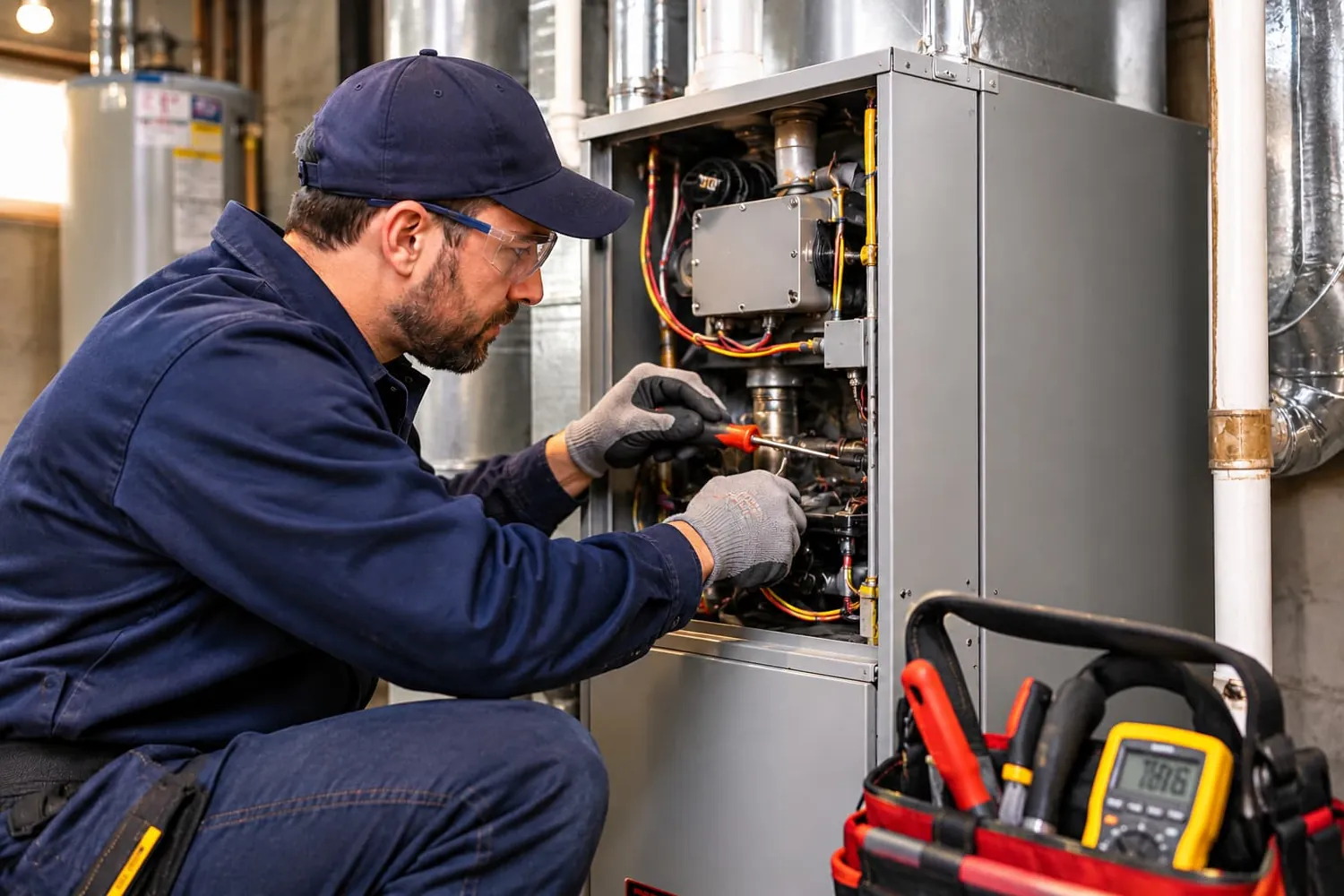
A repair visit can include identifying the furnace model and fuel type, checking diagnostic codes, and testing safe operation of accessible components. Work may involve the thermostat, control board, inducer assembly, hot-surface igniter, flame sensor, pressure switch, gas valve, blower parts, condensate drain, or vent piping, depending on the fault. If a cracked heat exchanger or combustion concern is suspected, the furnace should not be operated until it has been evaluated.
Furnace repair work in Glenwood Springs
| Part | What it does | Signs it is failing |
|---|---|---|
| Air filter | Catches dust before air enters the furnace. | Weak airflow, frequent cycling, or a visibly dirty filter. |
| Thermostat | Signals the furnace when the home needs heat. | The furnace does not start, runs at the wrong time, or does not reach the set temperature. |
| Igniter | Starts the burner ignition sequence. | The blower runs but the burners do not light. |
| Flame sensor | Confirms that a burner flame is present. | Burners light briefly, then shut off. |
| Blower motor | Moves heated air through the duct system. | Little airflow, loud operation, or a blower that does not start. |
Winter heating conditions along the Colorado and Roaring Fork rivers
Glenwood Springs has cold winters, with mountain weather and changing conditions around the river valleys. Snow, overnight temperature drops, and shaded streets can increase heating demand even when daytime sun is present. Spring and fall temperature swings can expose short-cycling and thermostat problems. Before winter, a clean filter, open supply registers, clear outdoor vent terminations, and a working carbon monoxide alarm are practical items to review.
Where we work in Glenwood Springs
Also nearby: Carbondale, New Castle, Silt, Rifle, Basalt.
Downtown Glenwood Springs
Older housing and buildings near the river corridors may have varied furnace locations and retrofit ductwork.
West Glenwood
Homes near the Interstate 70 and U.S. 6 corridor may need attention to filter loading and return-air cleanliness.
South Glenwood
Residential streets south of the Colorado River include homes with different sun exposure and hillside conditions.
Glenwood Meadows
This area includes newer development where sealed-combustion equipment and exterior vent terminations may be present.
No Name
Homes east of town in the canyon can face shaded winter conditions and limited direct sun.
Glenwood Springs furnace questions
What ZIP code is used for Glenwood Springs furnace repair?
Glenwood Springs uses ZIP code 81601. Use the street address when scheduling so the furnace location and access details are clear.
Why does my furnace run but some Glenwood Springs rooms stay cold?
The issue may involve duct leakage, a closed register, a blocked return, insulation gaps, or poor airflow at the blower. Valley shade and rooms over garages or crawlspaces can also feel cooler.
What should I check before calling about no heat?
Confirm that the thermostat is set to heat and has a setpoint above the room temperature. Check the furnace switch, breaker, filter, and whether exterior high-efficiency vent pipes are clear of snow or debris.
Can snow affect a high-efficiency furnace?
Yes. A condensing furnace commonly uses separate PVC intake and exhaust pipes outside the home. An obstruction can interrupt the pressure-switch sequence and keep the burners from lighting.
Why does a furnace keep turning on and off?
Short cycling can come from an overheating limit switch, dirty filter, restricted return air, flame-sensing trouble, thermostat issues, or venting faults. The pattern of the shutdown and any control-board code help narrow the cause.
Need furnace repair in Glenwood Springs?
Tell us your town and what is happening.