Furnace repair in Nunn, CO
Furnace repair guidance for Nunn homes facing northern Colorado winter wind.
Furnace Repair
TownNunn, CO
CountyWeld
ZIP80648
- 5years of experience
- 2,000+customers served
- 15team members
- 4.9/5from 345 Google reviews
Furnace problems in Nunn homes and acreage properties
Nunn is a town in northern Weld County, situated north of Greeley and east of Fort Collins. Colorado Highway 85 runs through town and connects the area with other communities along the northern Front Range. Residential properties include in-town homes and rural parcels beyond the town limits. Winter wind and open prairie conditions shape how buildings retain heat here.
Homes on larger lots
Properties outside central Nunn may have utility rooms in garages, basements, outbuildings, or additions. A furnace serving a larger footprint needs balanced supply and return airflow so distant rooms are not left underheated.
Garage and crawlspace ducts
Ducts passing through a garage, crawlspace, or attic can be exposed to colder surrounding air. Missing insulation, disconnected flex duct, and loose joints can reduce delivered heat and make the furnace run longer.
Thermostat location
A thermostat near a sunny window, exterior door, kitchen, wood stove, or supply register may not represent the temperature in the rest of the house. Thermostat placement and wiring are worth checking before replacing heating components.
Seasonal filter loading
Windblown dust and everyday indoor debris collect at the return-air filter. A filter that is too restrictive, installed backward, or left unchanged can affect blower performance and furnace temperature rise.
Diagnosing a no-heat call in Nunn
A forced-air furnace works through a sequence of safety checks before it produces heat. The thermostat calls for heat, the inducer establishes draft, the pressure switch confirms the venting path, the igniter operates, the gas valve opens, and the flame sensor verifies burner flame. After the heat exchanger warms, the control board starts the circulating blower to move air through the duct system.
No heat can result from an interruption at any stage of that sequence. A furnace may have power but fail to ignite because of an igniter problem, blocked intake or exhaust pipe, condensate issue, failed pressure switch circuit, dirty flame sensor, or a control board fault. A furnace that starts and stops repeatedly may be overheating from low airflow, a dirty blower wheel, closed return paths, or a malfunctioning limit switch.
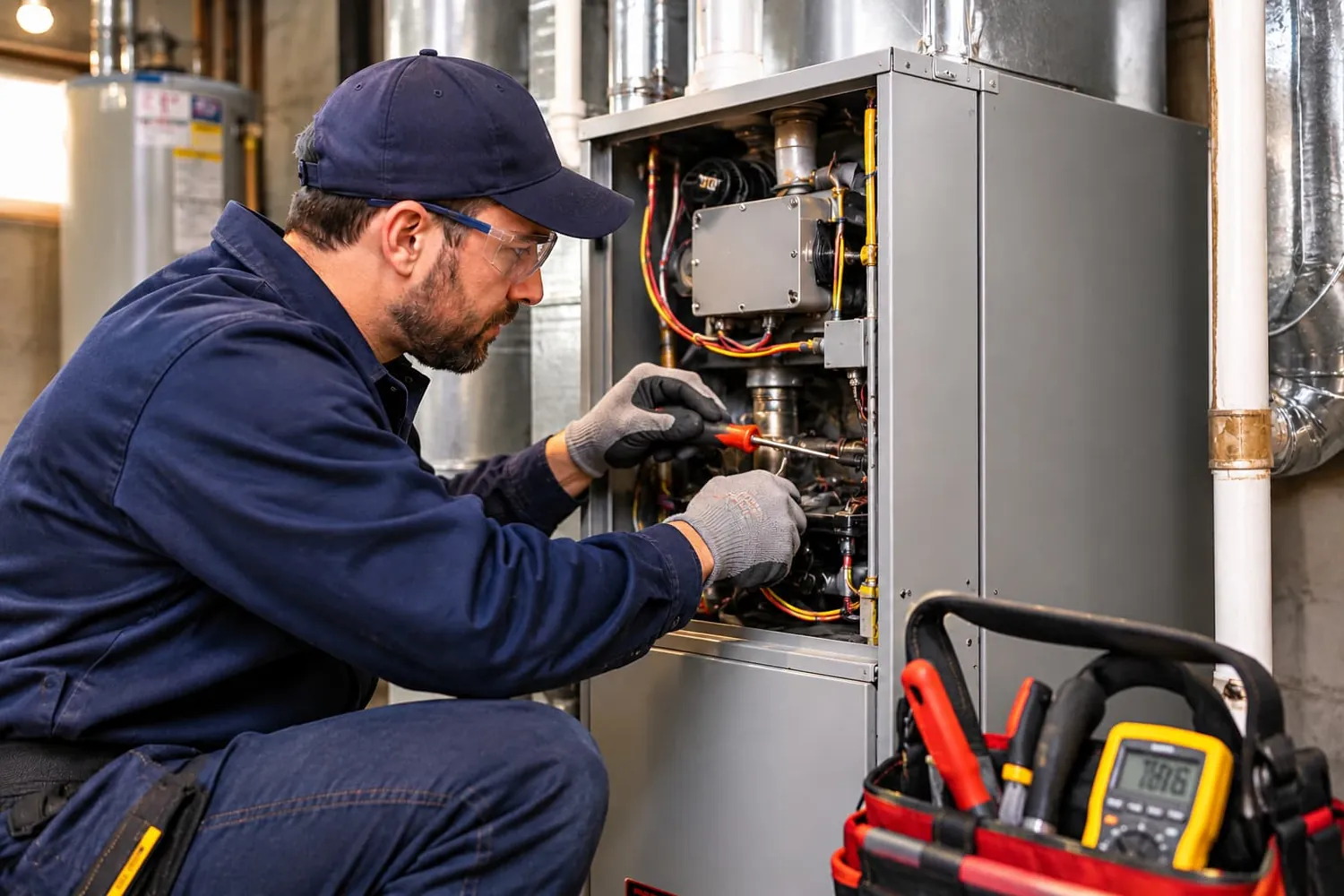
Work on a heating complaint should include a visual condition check and testing that follows the furnace manufacturer’s sequence. That can involve reading diagnostic codes, checking thermostat operation, inspecting the filter and blower compartment, examining venting, and testing electrical connections. Equipment with a cracked heat exchanger, combustion issue, gas leak concern, or carbon monoxide alarm should be treated as a safety matter rather than a comfort issue.
Furnace repair work in Nunn
| Part | What it does | Signs it is failing |
|---|---|---|
| Air filter | Catches dust before air enters the furnace. | Weak airflow, frequent cycling, or a visibly dirty filter. |
| Thermostat | Signals the furnace when the home needs heat. | The furnace does not start, runs at the wrong time, or does not reach the set temperature. |
| Igniter | Starts the burner ignition sequence. | The blower runs but the burners do not light. |
| Flame sensor | Confirms that a burner flame is present. | Burners light briefly, then shut off. |
| Blower motor | Moves heated air through the duct system. | Little airflow, loud operation, or a blower that does not start. |
Cold snaps, wind, and Nunn heating equipment
Nunn’s location on the High Plains brings cold winter weather and periods of strong wind. A home can lose heat more quickly at exterior walls, attic penetrations, garage connections, and poorly sealed duct runs during those conditions. Heating systems also see quick demand changes when sunny afternoons give way to cold nights. Pre-season maintenance helps identify filter, ignition, venting, and blower issues before sustained winter use.
Central Nunn
In-town properties can include established homes where furnace replacements and duct alterations have occurred over time.
Colorado Highway 85 corridor
Homes near the highway may need attention to dust control at entries and return-air locations.
Carr area
Carr is northwest of Nunn and includes rural northern Weld County properties with long duct runs and detached structures.
Eaton area
Eaton lies south of Nunn and has housing ranging from older in-town homes to newer residential construction.
Nunn furnace questions
What ZIP code serves Nunn, Colorado?
Nunn uses ZIP code 80648. Rural addresses outside town can have different mailing details, so provide the complete service address.
Why is my Nunn furnace blowing cool air?
The blower can run when burners have not lit, after the burner cycle ends, or when the thermostat fan setting is set to On. Ignition faults, flame-sensing issues, and overheating shutdowns can also lead to cool air from registers.
Can a dirty filter cause a furnace to shut down?
Yes, low airflow can make furnace temperature rise too high and open a safety limit switch. Replace the filter with the correct size, and do not block return grilles with furniture or stored items.
Why does my high-efficiency furnace have PVC pipes outside?
High-efficiency condensing furnaces commonly use PVC intake and exhaust pipes. Snow, ice, debris, or damage at the terminations can interfere with combustion air or exhaust flow.
When should I turn off the furnace?
Turn it off if there is a gas odor, smoke, visible soot, unusual burning smell that persists, or a carbon monoxide alarm. Follow emergency guidance from the gas utility or local emergency services when there is an immediate safety concern.
Need furnace repair in Nunn?
Tell us your town and what is happening.